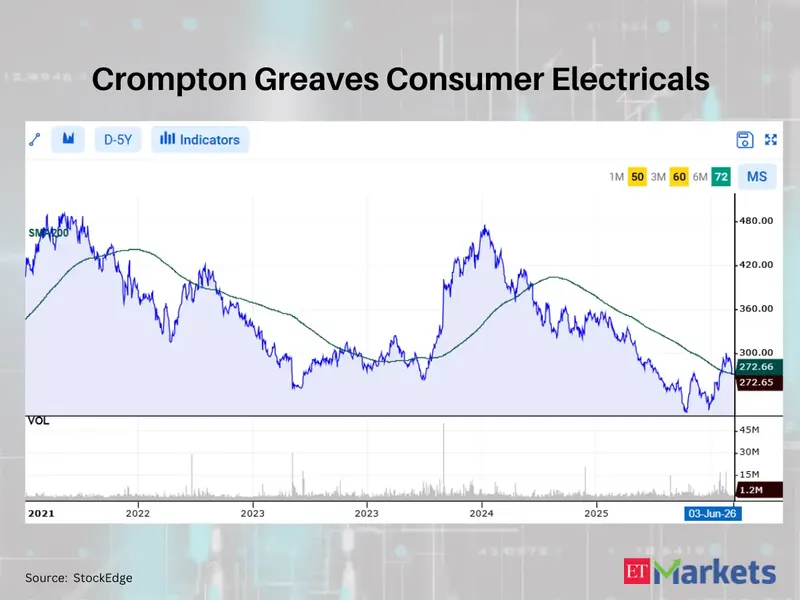
Among NSE-listed stocks with a market capitalisation exceeding Rs 10,000 crore, 12 stocks saw their closing prices dip below the 200-day moving average (DMA) on June 3, according to data from stockedge.com. This movement is considered a negative signal, as it suggests that these stocks are trading below their long-term trend line.
The 200-day moving average is a critical indicator used by traders to assess the overall trend of a stock. When a stock's price falls below this average, it is typically viewed as a bearish signal, indicating potential downward momentum. The recent development affects a dozen stocks with significant market capitalisation, highlighting a shift in market sentiment.
Technical scans from stockedge.com have identified these 12 stocks as experiencing a negative breakout, which could influence trading strategies and investor decisions. The 200 DMA serves as a benchmark for long-term price trends, and crossing below it can trigger sell signals for traders relying on technical analysis.
Investors and analysts often monitor such technical indicators to gauge market conditions and make informed decisions. The breach of the 200 DMA by these stocks could prompt a reassessment of their positions, especially for those with a focus on technical trading strategies.
The significance of the 200-day moving average lies in its ability to smooth out price fluctuations and provide a clearer picture of a stock's long-term trend. As such, the recent developments may lead to increased volatility and trading activity in the affected stocks.
Background
The 200-day moving average is a widely used technical indicator that helps traders and investors understand the long-term trend of a stock. Historically, stocks trading below this average are often seen as underperforming, which can lead to increased scrutiny and potential sell-offs.
Market participants will be closely watching these stocks in the coming days to see if they can recover above the 200 DMA or continue their downward trajectory. The situation underscores the importance of technical indicators in shaping market perceptions and investor behavior.