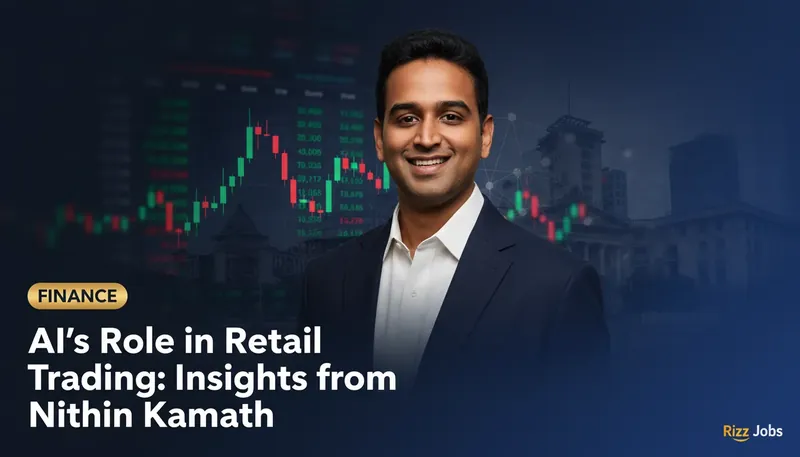
In an era where artificial intelligence (AI) is reshaping industries, its potential in the realm of retail trading is a hot topic. Nithin Kamath, the founder of Zerodha, India's largest retail brokerage, offers a sobering perspective on the limitations of AI for retail investors. According to Kamath, while AI can enhance trading discipline and execution, it falls short in consistently generating profits for retail investors. The primary reason lies in the inherent behavioral biases that retail investors possess, coupled with a lack of informational edge that institutional investors enjoy.
Institutional players have access to vast resources, data, and sophisticated algorithms, giving them a structural advantage over individual traders. This advantage makes it challenging for retail investors to outperform the market sustainably. Kamath emphasizes that AI, despite its capabilities, cannot create profitable strategies out of thin air. It can assist in refining strategies and reducing emotional decision-making, but the core challenge remains: retail investors often lack the same level of access to market-moving information as their institutional counterparts.
For Indian investors, this insight is crucial. The allure of AI-driven trading platforms might be tempting, but one must approach with caution. The Indian stock market, with its unique dynamics and regulatory environment, requires a nuanced understanding that AI alone cannot provide. Retail investors should focus on building a solid foundation of financial literacy and understanding market fundamentals to complement any AI tools they might use.
In conclusion, while AI can be a valuable tool in the arsenal of a retail trader, it is not a magic bullet. The key to successful trading lies in a balanced approach that combines technology with human insight and market knowledge. As the landscape of trading continues to evolve, investors must remain informed and adaptable, leveraging AI as a supportive tool rather than a sole strategy.