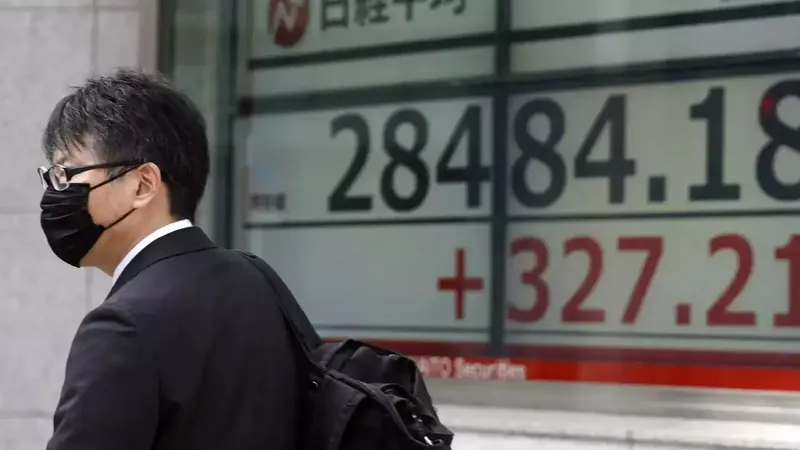
Asian markets experienced a downturn as South Korea's Kospi fell nearly 6%, driven by significant declines in major chipmakers like SK Hynix Inc. and Samsung Electronics Co., each dropping over 8%. The MSCI Asia Pacific Index was pulled down by 1.2% amid these developments.
The decline in Asian markets followed a rough session on Wall Street, where semiconductor stocks sank 6.3% and US equity-index futures indicated further losses for the S&P 500 and Nasdaq 100 indexes. Meanwhile, Brent crude oil prices fell 0.8% to $71 a barrel, the lowest since February 26, as flows through the Strait of Hormuz increased. Treasuries held their losses, while gold prices rose for a second consecutive day.
Federal Reserve Chairman Kevin Warsh's comments at the European Central Bank's annual forum in Sintra, Portugal, provided some market stability. Warsh reiterated the Fed's commitment to bringing inflation back to the 2% target, noting that inflation expectations had moderated recently. His remarks dampened expectations of a July rate hike, shifting investor focus to the upcoming US jobs report for further policy signals.
“At a minimum, his comments provided no fuel for speculation on a near-term July rate hike, and in our view suggest the new Fed chair – while keeping all options open meeting by meeting – does not currently see cause for an immediate hike.”
Krishna Guha, Evercore
In the technology sector, Meta Platforms Inc.'s plans to develop a cloud infrastructure business raised concerns about potential overcapacity. Additionally, Apple's chip negotiations with Chinese firms could threaten the market position of Samsung Electronics and SK Hynix.
Despite the selloff in semiconductor stocks, some investors found solace in Warsh's comments and the balanced inflation risks suggested by other central bankers. The US manufacturing sector showed resilience, expanding for a sixth consecutive month in June, with growth expected to reach approximately 2.4% this year.
Background
The global semiconductor industry has been under pressure due to geopolitical tensions and supply chain disruptions, affecting major players like Samsung and SK Hynix. Apple's move to source chips from Chinese manufacturers further complicates the competitive landscape.
Looking ahead, market participants will closely monitor the US jobs report for insights into future monetary policy moves. The geopolitical landscape remains a focal point, with ongoing discussions between US and Iranian officials potentially impacting oil flows and market sentiment.