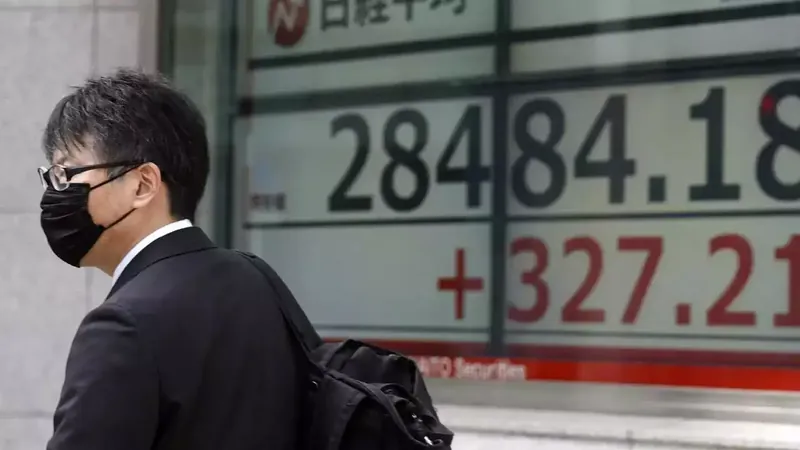
The MSCI Asia Pacific Index rose 0.1%, marking a sixth consecutive day of gains, while the Kospi surged over 2.5% on Thursday. This comes as US equity futures edged lower following significant gains in the S&P 500 and Nasdaq 100.
The chip sector saw a notable boost, with a gauge of chip stocks rising more than 6% to an all-time high, driven by Intel Corp.'s collaboration with Apple Inc. to design and manufacture semiconductors in the US.
Markets in the US, China, Hong Kong, and Taiwan were closed for holidays on Friday.
“The progress toward releasing oil supply from the Persian Gulf has supported equity prices.”
Ian Lyngen, BMO Capital Markets
Brent crude oil prices fell towards $79 a barrel, experiencing a weekly decline of over 9% due to the US-Iran interim peace deal, which has normalized shipping through the Strait of Hormuz.
Ian Lyngen of BMO Capital Markets noted that the release of oil supply from the Persian Gulf has supported equity prices, with lower energy costs easing inflationary concerns and leading to declines in longer-dated Treasury yields.
“My view remains that inflation should moderate gradually over the coming months, and this might allow the Fed to maintain current policy settings rather than implement fresh tightening.”
Fawad Razaqzada, Forex.com
Two-year Treasury yields steadied around 4.18% on Thursday, following a peak on Wednesday amid expectations of future interest-rate hikes after the Federal Reserve's hawkish stance.
Background
The recent developments in the oil market have significant implications for global inflation and interest rates. The US-Iran peace deal has alleviated one of the largest supply shocks in the crude market, impacting energy prices and inflation expectations.
As markets continue to respond to these shifts, attention will focus on the ongoing negotiations over Tehran's nuclear program and the potential for sustained lower energy costs to influence monetary policy decisions globally.