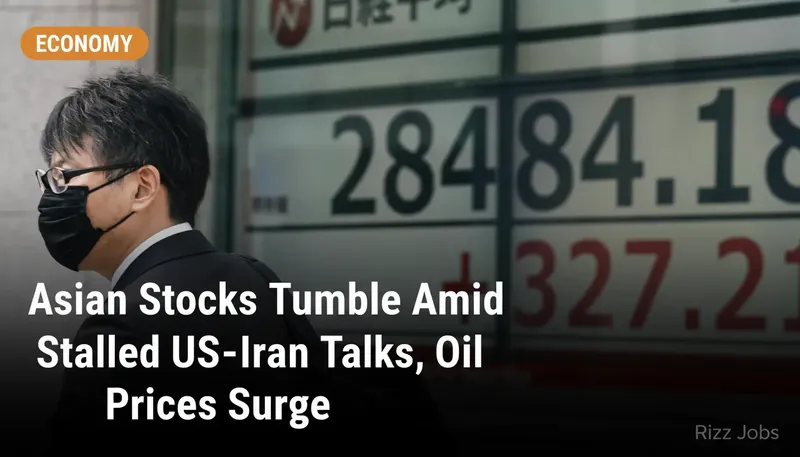
Asian stock markets witnessed a downturn today as ongoing negotiations between the United States and Iran failed to yield any significant progress, exacerbating tensions in the Middle East. The lack of advancement in talks has kept the strategically crucial Strait of Hormuz effectively closed, a key maritime chokepoint through which a significant portion of the world's oil supply is transported. This geopolitical uncertainty has spurred a rise in oil prices, with Brent crude reaching $106.20 per barrel, reflecting heightened concerns over potential disruptions in energy supply.
The ripple effects of these developments are being felt across global markets, with investors exhibiting caution amid the geopolitical turmoil. The closure of the Strait of Hormuz not only impacts oil transportation but also raises broader concerns about energy security, particularly for countries heavily reliant on oil imports. For Indian investors, the situation underscores the importance of monitoring global geopolitical events that can influence commodity prices and, by extension, the domestic economic landscape.
As oil prices climb, there is a potential for increased inflationary pressures, which could compel central banks, including the Reserve Bank of India, to reassess their monetary policy stances. This scenario presents a complex challenge for policymakers who must balance the need to support economic growth while managing inflation risks.
Market participants are also closely watching for any signals from major oil producers regarding potential adjustments in production levels to stabilize prices. The current environment highlights the intricate interplay between geopolitical dynamics and financial markets, emphasizing the need for investors to remain vigilant and informed about global developments that may affect their portfolios.