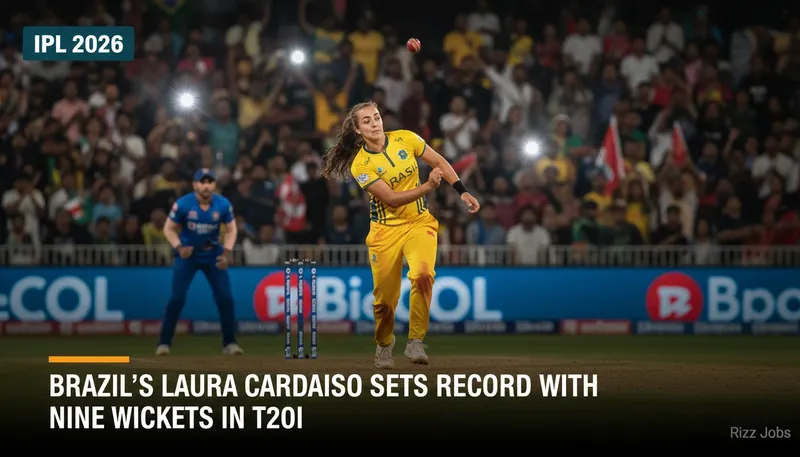
In a historic feat that has sent ripples through the cricketing world, Brazil's Laura Cardoso has etched her name in the annals of T20 International cricket by becoming the first player to claim nine wickets in a single match. At just 21 years old, Cardoso's extraordinary performance against Argentina not only secured a decisive victory for her team but also set a new benchmark in the sport. Her figures of 3-2-4-9, which included a remarkable hat-trick, have captivated cricket enthusiasts globally and underscored the growing prowess of women's cricket in regions traditionally dominated by football.
Cardoso's achievement is particularly significant as it highlights the expanding talent pool in women's cricket, a sport that is gaining traction beyond its traditional strongholds. The Brazilian allrounder's performance is a testament to the increasing competitiveness and skill level in the women's game, which is attracting more viewership and investment. For Indian investors, this signals potential growth opportunities in sports-related ventures, especially as cricket continues to globalize and diversify its audience base.
The rise of players like Cardoso could have implications for the Indian Premier League (IPL), which has been exploring avenues to expand its reach and influence. As women's cricket gains momentum, the IPL might consider integrating more international talent into its women's league, thereby enhancing its brand value and marketability. This could lead to increased sponsorship deals and broadcasting rights, offering lucrative returns for stakeholders involved.
Moreover, Cardoso's record-breaking performance serves as an inspiration for aspiring cricketers worldwide, encouraging more young women to pursue the sport professionally. This could lead to a larger talent pool and more competitive leagues globally, further driving the commercial and cultural impact of cricket.
In summary, Laura Cardoso's nine-wicket haul is not just a personal triumph but a milestone for women's cricket, with potential ramifications for the sport's commercial landscape, particularly in markets like India where cricket is a major economic driver.