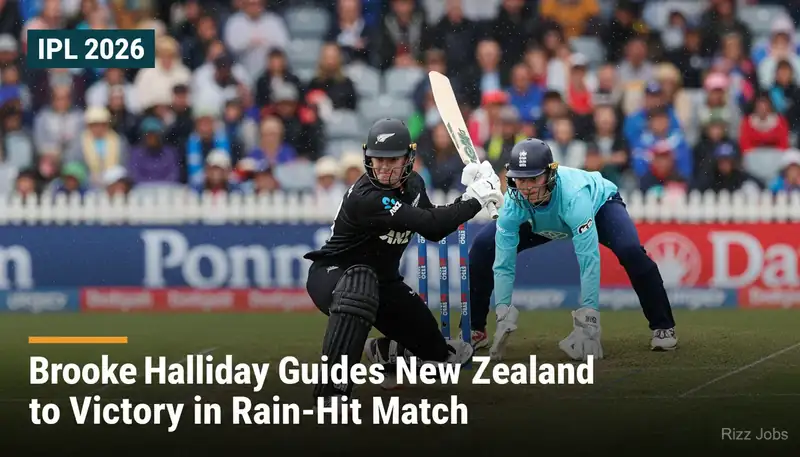
In a thrilling contest marked by unpredictable weather, Brooke Halliday emerged as the hero for New Zealand, steering her team to a series-levelling victory against England. The match, held amidst intermittent showers, was a testament to the resilience and adaptability required in cricket. Despite a strong start from England, with Lauren Bell dismantling New Zealand's top order, the rain-reduced conditions played a significant role in altering the dynamics of the game. Halliday's composed innings under pressure showcased her ability to anchor the innings and exploit the revised conditions effectively.
The match, originally scheduled for a full 50 overs, was curtailed due to persistent rain, forcing both teams to adapt their strategies on the fly. England, having set a challenging target, seemed poised for victory until Halliday's strategic play turned the tide. Her performance not only highlights her individual prowess but also underscores the importance of depth in batting line-ups, especially in weather-affected games.
For Indian investors and business readers, the match serves as a reminder of the unpredictability inherent in sports, akin to market fluctuations. Just as weather can alter the course of a cricket match, unforeseen global events can impact market trends, necessitating agile strategies and diversified portfolios. As the Indian Premier League (IPL) continues to grow in popularity, understanding the nuances of player performances and team dynamics becomes crucial for stakeholders involved in the business of cricket.
This victory for New Zealand not only levels the series but also sets the stage for an exciting finale, drawing parallels to the competitive spirit seen in business and finance. As teams regroup and strategize for the next encounter, the lessons from this match could serve as valuable insights for investors looking to navigate the complexities of market conditions.