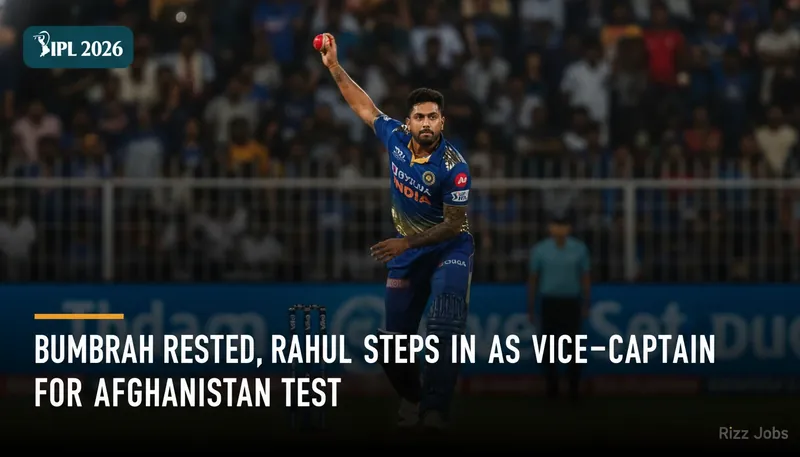
In a strategic move ahead of the upcoming Test match against Afghanistan, the Indian cricket team has decided to rest its ace fast bowler, Jasprit Bumrah. This decision comes as part of a broader strategy to manage player workload, especially given Bumrah's recent return from injury. The team management is keen on preserving his fitness for more critical fixtures in the international calendar. In his absence, KL Rahul has been appointed as the vice-captain, replacing Rishabh Pant who is currently recuperating from injuries sustained in a car accident earlier this year.
This decision reflects the Indian cricket board's emphasis on balancing player health with performance demands. Bumrah, known for his unique bowling action and ability to deliver under pressure, has been pivotal in India's recent successes across formats. His rest period will not only aid in his recovery but also provide an opportunity for other bowlers to showcase their skills on the international stage.
KL Rahul's appointment as vice-captain is a testament to his leadership qualities and consistent performance. Rahul, who has been a versatile player for India, offers a steadying influence both on and off the field. His experience in leading teams in the Indian Premier League (IPL) adds to his credentials, making him a suitable choice for the vice-captaincy role.
For Indian cricket enthusiasts and investors in the sports industry, these changes signal the team's adaptive strategies in player management. The Indian Premier League, a significant contributor to the cricket economy, often dictates player availability for international fixtures. As the IPL continues to grow, the balancing act between league commitments and national duties becomes increasingly complex.
The upcoming Test against Afghanistan will serve as a litmus test for the team's depth and adaptability. It will also be a crucial opportunity for emerging players to make their mark. For investors, the dynamics of player management and team performance are key indicators of the sport's commercial viability and growth potential in India.