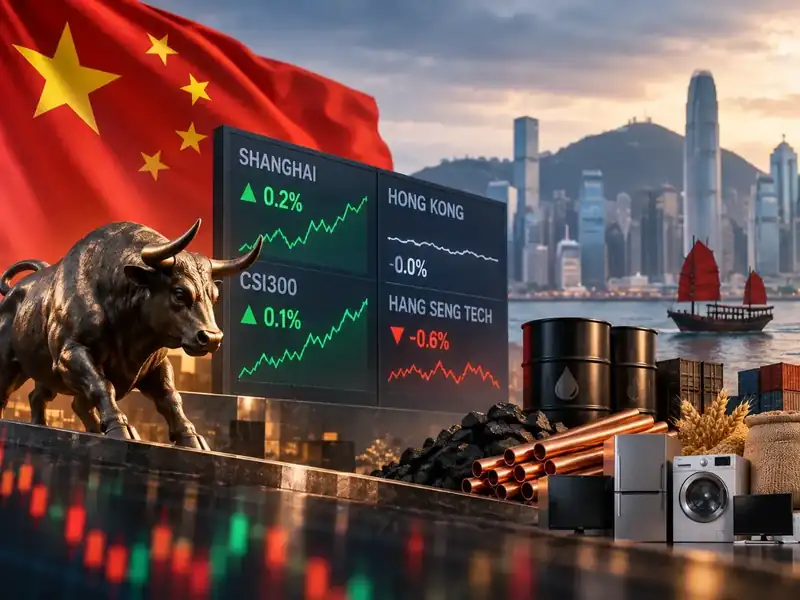
Chinese stocks saw a modest uptick after the release of August inflation data, with the blue-chip CSI300 index rising by 0.1% and the Shanghai Composite gaining 0.2%. Meanwhile, the Hang Seng Index in Hong Kong remained unchanged, while the Hang Seng Tech Index fell by 0.6%.
China's factory-gate inflation accelerated in August, driven by higher commodity and food prices amid supply risks linked to Middle East tensions. Consumer prices also saw an increase, though subdued domestic demand continues to weigh on the broader economic outlook. Prices rose notably in sectors such as non-ferrous metal smelting and processing and energy, while household appliance prices fell back into negative territory, indicating ongoing weakness in parts of consumer demand.
The latest inflation figures provide little evidence of a broad-based improvement in the Chinese economy. Service-related consumer inflation remained subdued, suggesting that stronger commodity prices have not translated into a meaningful recovery in underlying domestic demand.
Market performance varied across sectors, with coal, defence, energy, and shipping-related stocks advancing sharply due to escalating tensions in the Middle East, which pushed oil prices higher. Conversely, media and real estate stocks underperformed amid concerns over weak domestic activity.
In Hong Kong, technology stocks faced pressure, leading to a 0.6% decline in the Hang Seng Tech Index. The cautious market mood reflects ongoing concerns about China's growth outlook, with BofA Securities maintaining its 2026 growth forecast for China at 4.5% but reducing projections for 2027 and 2028 to 4.2% and 4.0%, respectively.
Background
China's economic recovery has been uneven, with recent inflation data highlighting the challenges posed by weak domestic demand despite rising commodity prices. The ongoing geopolitical tensions in the Middle East further complicate the economic landscape, affecting commodity markets and investor sentiment.
Looking ahead, investors will be watching for any policy measures from Chinese authorities to support economic momentum, as the current outlook suggests potential delays in policy support despite weakening economic conditions.