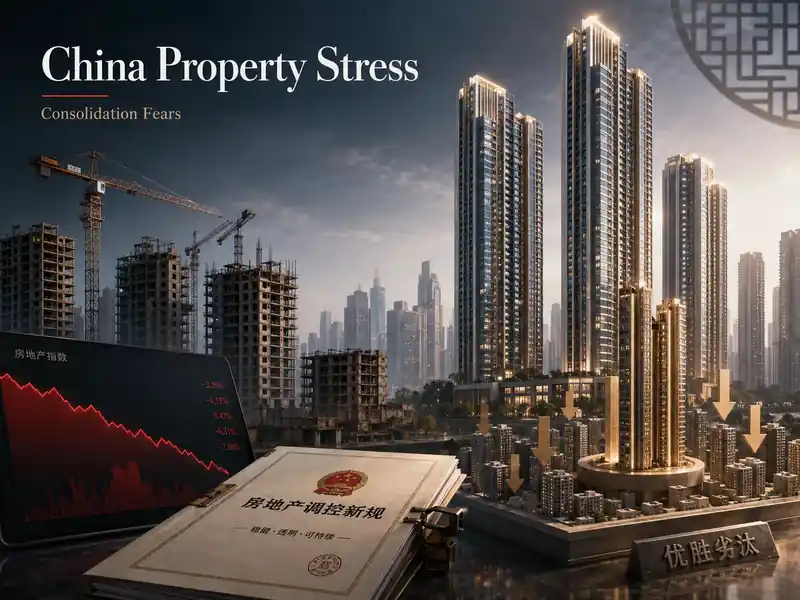
Chinese authorities on Friday introduced new measures to reduce developers' reliance on pre-sale funds, aiming to stabilize the pressured property market. The changes are part of Beijing's broader strategy to address weak demand, high debt levels, and a liquidity crisis among developers.
The CSI300 Real Estate Index fell around 2% in early trading, while an index tracking Hong Kong-listed Chinese property developers declined more than 4%. The Hang Seng’s Hong Kong developers index also dropped more than 3%. Major state-backed developers like China Jinmao and Greentown China saw declines of at least 10% in Hong Kong trading, while China Resources Land and China Overseas Land & Investment fell over 7% and 6%, respectively.
Under the new rules, mortgages will only be provided after housing projects are completed. Local governments are encouraged to promote the sale of completed homes, reducing risks for buyers. This shift could significantly alter the financing model for developers, limiting their ability to rely on homebuyer funds.
The regulatory overhaul is expected to drive consolidation in China's property industry. Analysts suggest that developers with weaker balance sheets may struggle to adapt, potentially leading to market exits. Everbright Securities noted that the measures increase requirements for developers' financing capabilities and management expertise.
The new measures also extend the maximum tenure for personal mortgage loans from 30 to 40 years, potentially easing the financial burden on homebuyers. However, analysts believe this alone will not significantly boost housing demand.
Background
These regulatory changes highlight Beijing's efforts to address the housing market's reliance on pre-sales. While they may enhance buyer protection and reduce delivery risks, they could also add financial pressure on developers during the transition.
The market's immediate reaction suggests a focus on potential restructuring and consolidation among property developers.