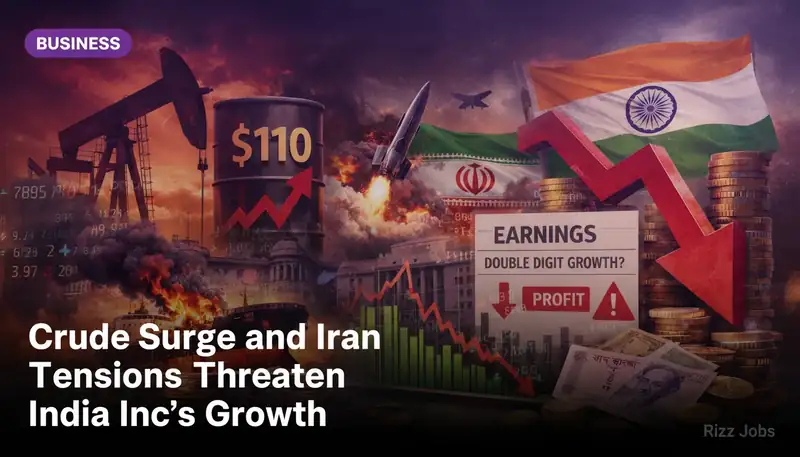
India's corporate sector is bracing for a challenging fiscal year as escalating tensions in Iran and soaring crude oil prices, now exceeding $110 per barrel, cast a shadow over the anticipated double-digit earnings growth for FY27. The geopolitical unrest in the Middle East has sent shockwaves through global oil markets, raising concerns about supply disruptions and further price hikes. For India, a country heavily reliant on oil imports, this scenario spells trouble for sectors with high import dependencies and those directly linked to crude oil.
Analysts are sounding alarms over potential earnings downgrades across various industries, particularly those in manufacturing and transportation, which are directly impacted by rising fuel costs. The expected hit to profit margins could delay the recovery trajectory that many companies had forecasted, pushing it back by at least two quarters. This situation is compounded by the broader economic implications of higher oil prices, which could stoke inflationary pressures and strain consumer spending.
Investors are advised to exercise caution and closely monitor sectors like aviation, logistics, and chemicals, which are particularly vulnerable to crude price volatility. Companies in these sectors may face increased operational costs, leading to tighter profit margins and potential revisions in earnings forecasts. Meanwhile, the government may need to reassess its fiscal strategies to mitigate the impact of these external shocks on the domestic economy.
In this volatile environment, diversification and strategic hedging could be key for investors looking to navigate the uncertainties. While the immediate outlook appears challenging, opportunities may arise in sectors less exposed to crude fluctuations or those that can pass on costs to consumers effectively. As the situation unfolds, stakeholders will be keenly observing policy responses both domestically and internationally, which could influence market dynamics significantly.


