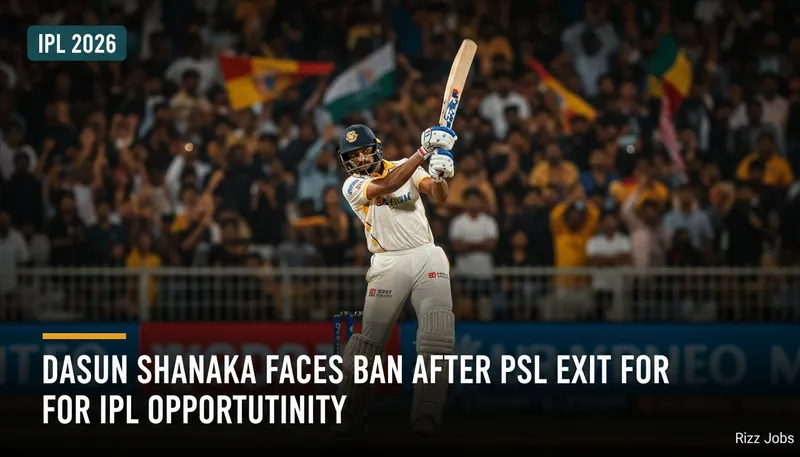
In a significant development within the cricketing world, Sri Lankan cricketer Dasun Shanaka has been handed a one-year ban by the Pakistan Cricket Board (PCB) following his abrupt departure from the Pakistan Super League (PSL) to join the Indian Premier League (IPL). This move comes after Shanaka was signed by the Rajasthan Royals as a replacement for the injured Sam Curran. The decision by the PCB underscores the growing tensions and competitive dynamics between the PSL and IPL, two of the most lucrative T20 leagues globally.
Shanaka's decision to prioritize the IPL over the PSL highlights the financial allure and prestige associated with the Indian league, which often attracts top international talent. The IPL's financial muscle is evident, with players earning significantly higher salaries compared to other leagues. This incident could set a precedent, influencing future player movements and contractual obligations between leagues.
For Indian investors and business readers, this event is a reminder of the IPL's economic impact, not just in cricket but also in broader business terms. The league's ability to attract global talent enhances its brand value, driving sponsorship deals, merchandise sales, and broadcasting rights. The financial ecosystem surrounding the IPL continues to grow, presenting opportunities for investors in sports management, media rights, and associated industries.
As the IPL continues to expand its influence, stakeholders must navigate the complexities of international player contracts and league commitments. The PCB's decision to impose a ban on Shanaka could prompt other boards to reassess their strategies and contractual clauses to safeguard their interests. This development also raises questions about the balance of power in global cricket and the role of financial incentives in shaping player careers.