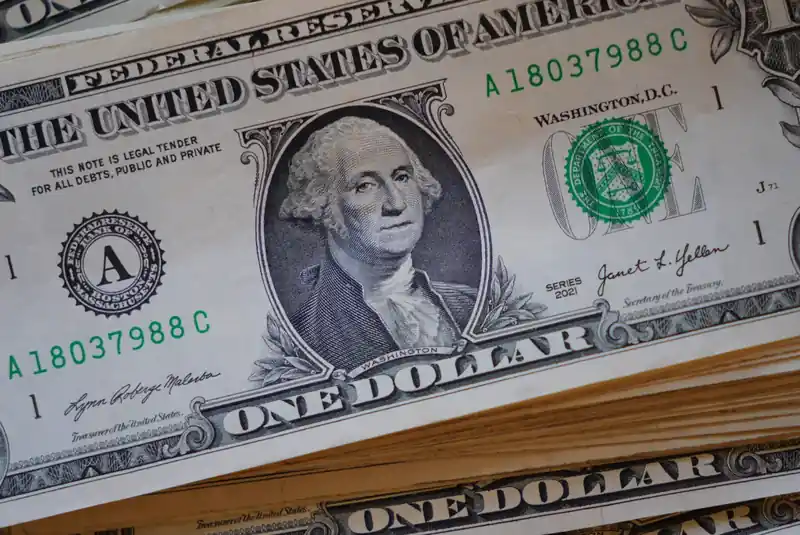
The US dollar is poised for a weekly decline as reports of a potential US-Iran ceasefire deal emerge, pending approval from former President Donald Trump. The deal, if approved, would extend the truce for another 60 days, facilitating traffic through a critical waterway while negotiators address complex issues like Iran's nuclear program.
Oil prices have decreased, and the demand for the safe-haven dollar has waned, although investor caution persists due to mixed signals from Washington and Tehran earlier this week. The euro rose to $1.1653, marking a 0.03% increase in Asia, while the pound remained stable at $1.3445. The Australian dollar held steady at $0.7164, and the New Zealand dollar climbed 0.2% to $0.5946, nearing its highest level in over two weeks.
The dollar index, which tracks the greenback against a basket of currencies, remained largely unchanged at 98.997 after a 0.2% drop on Thursday. It is on track to break a two-week streak of gains, potentially ending the week 0.3% lower.
“It might well be that once this crisis in Iran, in the Middle East, is behind us, we expect the U.S. dollar to remain weak.”
Massimiliano Castelli, head of strategy in the global sovereign markets team at UBS Asset Management
Massimiliano Castelli, head of strategy in the global sovereign markets team at UBS Asset Management, noted that the crisis in Iran has temporarily halted the dollar's weakness due to safe-haven demand, but many investors are eager to diversify away from US dollar assets.
The Japanese yen strengthened to 159.27, moving away from the critical 160-per-dollar level, which has previously prompted interventions by Japanese authorities. Meanwhile, US inflation data showed the fastest increase in three years in April, driven by higher energy prices due to the Iran conflict, reinforcing economists' expectations that the Federal Reserve will maintain interest rates unchanged well into next year.
Background
The potential ceasefire deal between the US and Iran could ease tensions in the Middle East, impacting global oil prices and currency markets. Investors should monitor developments closely as negotiations progress and assess the broader implications for international trade and economic stability.
The potential ceasefire deal between the US and Iran could ease tensions in the Middle East, impacting global oil prices and currency markets. Investors should monitor developments closely as negotiations progress and assess the broader implications for international trade and economic stability.