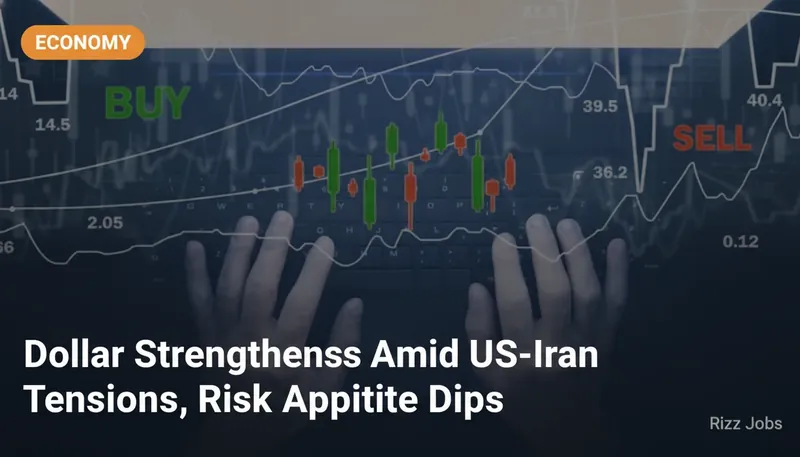
In the ever-volatile world of global forex markets, the US dollar has emerged stronger amidst rising geopolitical tensions between the United States and Iran. This development has led to a muted risk appetite among investors worldwide. As the conflict escalates, market participants are increasingly seeking safe-haven assets, with the dollar being a primary beneficiary. The dollar index, which measures the greenback against a basket of six major currencies, has seen a noticeable uptick, reflecting investor sentiment shifting towards safety.
The ongoing conflict has injected a fresh wave of uncertainty into global markets, affecting not only currency trading but also impacting commodities and equities. For Indian investors, this scenario presents a complex landscape. While a stronger dollar can lead to increased costs for imports, particularly crude oil, it can also impact the Indian rupee's valuation, influencing inflation and trade balances.
Financial analysts suggest that the Reserve Bank of India may need to reassess its monetary policy stance if the dollar continues its upward trajectory, as this could have broader implications for India's economic stability. Additionally, Indian exporters might find their goods less competitive in the global market due to the stronger dollar, potentially affecting trade revenues.
In the short term, investors are advised to closely monitor geopolitical developments and consider diversifying their portfolios to hedge against potential volatility. As the situation unfolds, maintaining a balanced approach could be key to navigating the uncertain waters of currency fluctuations and geopolitical risks.