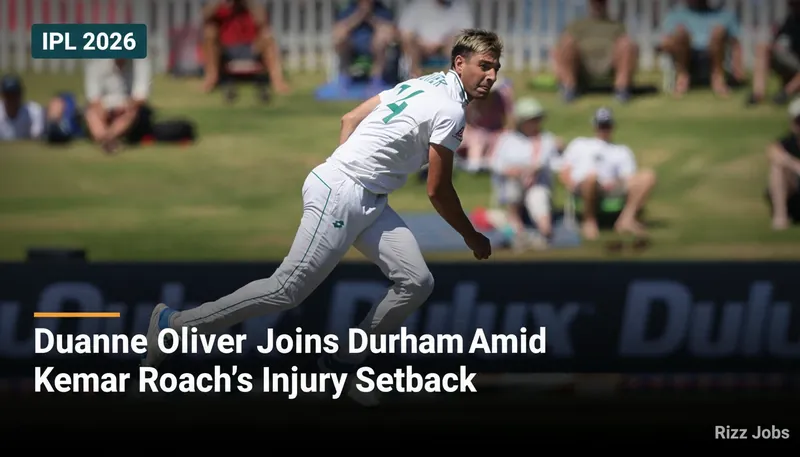
In a significant development for the cricketing world, Duanne Olivier has been expedited to join Durham following a hamstring injury to Kemar Roach. Originally scheduled to swap places mid-season, Olivier's early arrival comes as a strategic move after Roach's unfortunate injury during a match against Middlesex. This shift not only impacts Durham's team dynamics but also raises questions about the depth and resilience of cricket teams in handling unexpected player changes. For Indian investors and business readers, this incident underscores the importance of agility and contingency planning in sports management, a principle equally applicable to business operations. The Indian Premier League (IPL), known for its high-stakes environment, often witnesses such mid-season adjustments, which can influence team performance and, by extension, fan engagement and sponsorship deals. As Olivier steps in, all eyes will be on how quickly he adapts and contributes to Durham's campaign. This scenario serves as a reminder of the unpredictable nature of sports and the need for robust backup plans, akin to risk management strategies in financial portfolios. The IPL's commercial ecosystem, heavily reliant on player performances, can draw parallels to how businesses must pivot swiftly in response to unforeseen challenges.
ipl
Duanne Olivier Joins Durham Amid Kemar Roach's Injury Setback
Rizz Jobs News Desk··1 min read
Market Briefing
- Duanne Olivier joins Durham early due to Kemar Roach's injury, highlighting the need for agility in sports team management.
- This shift parallels risk management in business.
Share this story
Topics
Duanne OlivierKemar RoachDurham cricketIPL 2023sports management
Stay Informed
India's financial news, delivered daily.
Finance, markets, economy and startup updates — straight to your inbox.
Subscribe Free →