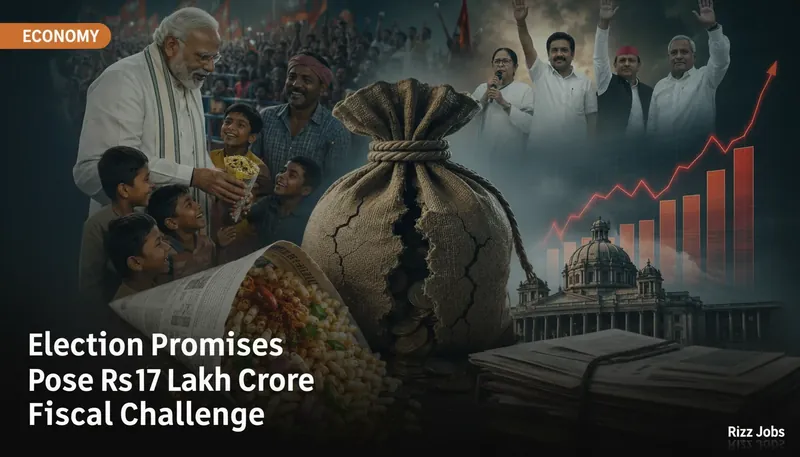
The recent state election results in India have unveiled a significant fiscal challenge, as the promises made during the campaigns are set to impose a staggering Rs 1.69 lakh crore burden on state finances. This development has sparked a wave of concern among economists and financial analysts, who are now scrutinizing the potential impact on the broader economic landscape. The election pledges, which initially seemed like mere campaign rhetoric, have now materialized into substantial fiscal commitments that threaten to strain already stretched state budgets.
Prime Minister Narendra Modi's campaign trail in West Bengal, which featured light-hearted moments and populist promises, has now become a focal point for fiscal scrutiny. The promises made during the elections, including various welfare schemes and subsidies, are expected to significantly increase state expenditures. This scenario presents a dual challenge: managing the expectations of the electorate while maintaining fiscal discipline.
For investors and businesses, this development could lead to shifts in state-level economic policies, potentially impacting sectors reliant on government contracts and subsidies. The increased fiscal burden may also lead to higher borrowing by states, affecting their credit ratings and, consequently, the investment climate. Moreover, the ripple effects could extend to the national level, influencing central government policies and fiscal strategies.
As states grapple with these financial commitments, there is a growing call for a more sustainable approach to election promises, emphasizing fiscal responsibility and long-term economic planning. The situation highlights the need for a balanced approach that aligns political objectives with economic realities, ensuring that electoral promises do not compromise fiscal stability.