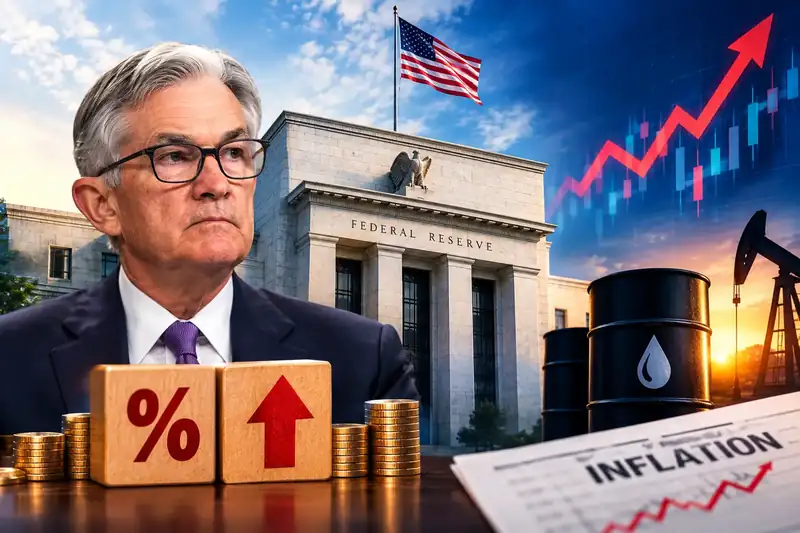
The Federal Reserve is expected to announce a quarter-point increase in the benchmark rate to a 3.75%-4.00% range at 2 p.m. EDT (1800 GMT) following a two-day meeting. Investors are keenly watching for signals of further tightening amid rising inflation concerns.
The anticipated rate hike presents a challenge for Fed Chairman Warsh, who was appointed by President Donald Trump with the expectation of lowering borrowing costs. The move could have political implications ahead of the November congressional elections, where Trump's Republican Party is defending narrow majorities.
Recent inflation data, including a 0.3% increase in core consumer prices in August, has shifted the policy outlook. This, coupled with rising oil prices exceeding $100 a barrel due to Middle East tensions, complicates the Fed's inflation target of 2%.
Several Fed officials, including Cleveland Fed President Beth Hammack, have already expressed support for higher rates. Warsh's focus on price stability and market expectations makes it challenging to justify keeping rates unchanged.
Economists view the decision as a delicate balancing act for Warsh, especially if projections indicate another rate increase later this year. A September hike could signal a shift in U.S. monetary policy direction.
Background
The Fed's decision comes amid a backdrop of hotter-than-expected inflation data and rising oil prices, which have complicated the central bank's efforts to achieve its 2% inflation target. The policy outlook has shifted significantly in recent weeks, with several Fed officials advocating for higher rates.
The outcome will be closely monitored by financial markets to assess whether it marks the start of a broader tightening cycle or a limited response to inflation risks.