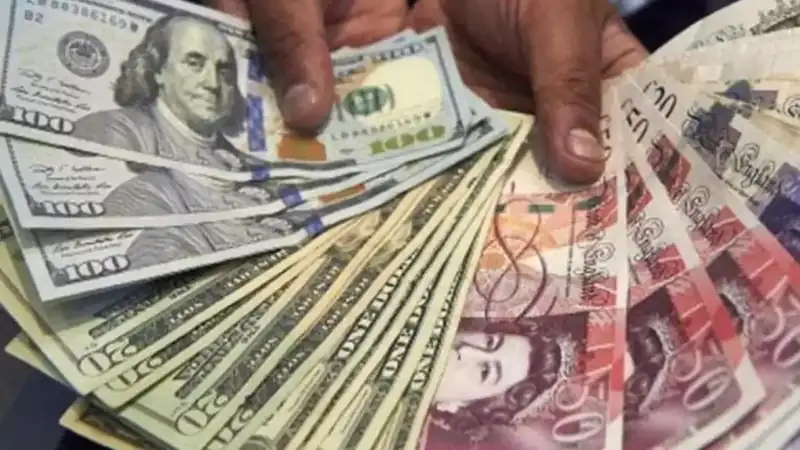
India's foreign currency assets saw a significant increase of $4.8 billion, reaching $555.9 billion in the previous week, despite the Reserve Bank of India's (RBI) active dollar sales in the foreign exchange market to stabilize the rupee.
The central bank's intervention was aimed at preventing the rupee from falling past its record low of 96.96, as it closed at 96.56 on July 24. Traders estimate that the RBI sold approximately $1 billion to $1.5 billion in the market last week. Meanwhile, gold reserves also rose by $1.3 billion, totaling $103 billion.
Gaura Sengupta, chief economist at IDFC First Bank, attributed the increase in reserves to inflows from FCNR(B) deposits, which likely offset the dollar sales. Additionally, RBI Governor Sanjay Malhotra highlighted that the country received $32 billion in inflows through various government and RBI schemes.
“The pick-up in reserves is likely due to the inflows seen via FCNR(B) deposits, which could have countered the dollar sales seen in the foreign exchange market last week.”
Gaura Sengupta, Chief Economist at IDFC First Bank
Despite the recent uptick, total reserves have declined from their peak of $728 billion earlier this year, reflecting ongoing challenges in maintaining reserve levels.
The increase in reserves is a positive sign for India's economic stability, providing a buffer against external shocks and currency volatility. However, the central bank's continued intervention in the forex market underscores the ongoing pressure on the rupee.
Background
India's forex reserves have been under pressure due to global economic uncertainties and rising oil prices, which have impacted the rupee's value. The RBI's interventions are part of broader efforts to maintain economic stability.
Looking ahead, market participants will closely monitor the RBI's future actions in the forex market and any further government measures to attract foreign inflows, as these will be crucial in maintaining reserve levels and supporting the rupee.