A significant agreement involving the opening of the Strait of Hormuz has been reached, as announced by Pakistani Prime Minister Shehbaz Sharif and U.S. President Donald Trump. This development, which lacks detailed specifics, has led to a notable decline in oil prices and a surge in global markets.
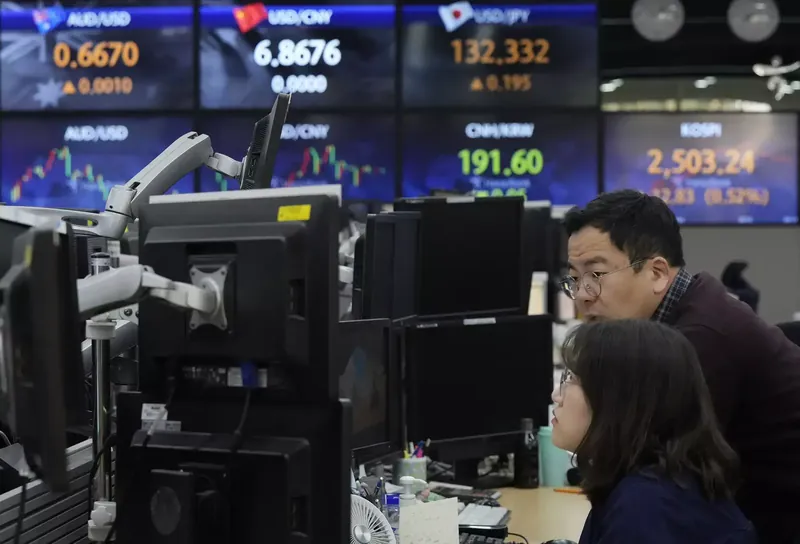
Brent crude prices fell by 4% to $83.80 a barrel, while U.S. crude dropped 4.7% to $80.89 a barrel. This decline in oil prices is a relief for central banks globally, as it eases inflationary pressures. Asian markets responded positively, with Japan's Nikkei climbing 3.0% and South Korea's market gaining 4.3%.
In Europe, futures for EUROSTOXX 50, DAX, and FTSE all saw modest increases. The U.S. markets also reacted positively, with S&P 500 futures rising 0.9% and Nasdaq futures jumping 1.5%. Central banks in several countries, including the U.S., UK, and Japan, are scheduled to meet this week, with Japan expected to raise rates.
“The lack of details especially on freedom of shipping is a concern but not one that should constrain markets today as the surge in risk appetite plays out.”
Sean Callow, Senior FX Analyst at ITC Markets
The Federal Reserve is anticipated to maintain its current rates, with investors closely watching for any changes in the Fed's stance on inflation. Treasury yields fell, with 2-year notes dropping 6 basis points to 4.02%, while the U.S. dollar weakened against major currencies.
The potential for sustained lower oil prices is particularly beneficial for energy-importing countries like Japan, and it has sparked optimism across global financial markets.
“We see Brent oil futures falling to $80 by the end of the year assuming the strait does not close again.”
Vivek Dhar, Mining and Energy Analyst at CBA
Background
The Strait of Hormuz is a critical chokepoint for global oil shipments, and any disruptions can significantly impact oil prices and global markets. The agreement to keep it open is crucial for maintaining stability in energy supplies.
Looking ahead, markets will be closely monitoring the implementation of the Gulf deal and its impact on oil exports. Central banks' policy decisions will also be pivotal in shaping market dynamics in the coming weeks.