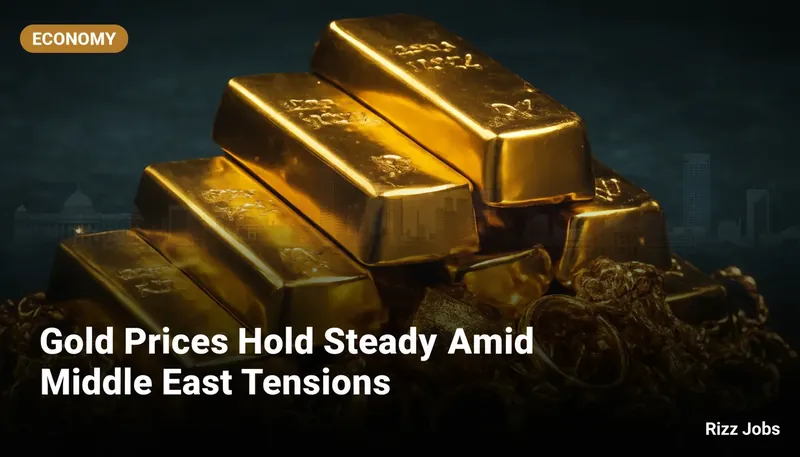
Gold prices have remained relatively stable as geopolitical tensions in the Middle East and stalled U.S.-Iran peace negotiations continue to weigh heavily on investor sentiment. The recent naval engagements and maritime blockades in the Gulf region have added layers of uncertainty, prompting investors to seek refuge in safe-haven assets like gold. Despite minor fluctuations, spot gold has seen a slight uptick, reflecting the cautious optimism among investors. U.S. gold futures have also edged higher, indicating that market participants are closely monitoring the unfolding geopolitical landscape.
The Middle East, a region already fraught with historical complexities, has seen a resurgence of conflict that could have far-reaching implications for global markets. The stalled talks between the U.S. and Iran further exacerbate the situation, as diplomatic solutions seem increasingly elusive. For Indian investors, the stability in gold prices offers a buffer against the volatility seen in other asset classes. As the Indian economy navigates its own set of challenges, including inflationary pressures and fluctuating currency values, gold remains a critical component of a diversified investment portfolio.
Market analysts suggest that the current geopolitical climate could lead to a sustained interest in gold as a hedge against uncertainty. The Indian market, with its deep-rooted cultural affinity for gold, is likely to see continued demand, both from retail investors and institutional players. As the global economic environment remains unpredictable, gold's role as a safe-haven asset is reaffirmed, offering a degree of security amidst the chaos.
In conclusion, while the immediate outlook for gold prices appears stable, the underlying geopolitical tensions and economic uncertainties could lead to further fluctuations. Investors are advised to stay informed and consider the broader implications of global events on their investment strategies.