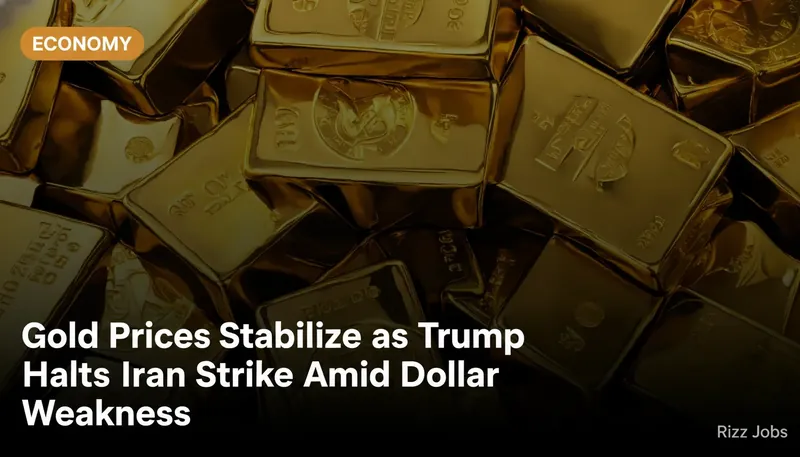
In a significant development for the global commodities market, gold prices have shown stability following a series of geopolitical and economic events. The recent decision by U.S. President Donald Trump to pause a planned military strike on Iran has introduced a new dynamic to the precious metals market. This decision, aimed at fostering diplomatic negotiations, comes amidst a backdrop of a weakening U.S. dollar and declining oil prices, which have collectively contributed to easing inflationary pressures. For Indian investors, this scenario presents a complex interplay of factors that could influence investment strategies in the commodities sector.
The stabilization of gold prices is largely attributed to the softer dollar, which typically makes gold cheaper for holders of other currencies, thus boosting demand. Additionally, the easing of oil prices, a key driver of inflation, has further supported the precious metal's price stability. However, the broader impact on other precious metals such as silver, platinum, and palladium has been negative, with these commodities experiencing declines.
For Indian markets, the implications are multifaceted. A stable gold price is beneficial for Indian investors, as gold is a popular investment vehicle and a hedge against inflation. The Reserve Bank of India's monetary policy decisions could also be influenced by these global developments, as a stable gold price may reduce inflationary concerns and impact interest rate decisions.
Moreover, the geopolitical tension between the U.S. and Iran could have ripple effects on global trade and oil prices, which are crucial for India's economy. Investors should closely monitor these developments, as any escalation could lead to volatility in both the commodities and currency markets.
In summary, while the immediate stabilization of gold prices offers some respite, the underlying geopolitical tensions and economic factors warrant careful consideration by investors and policymakers alike.