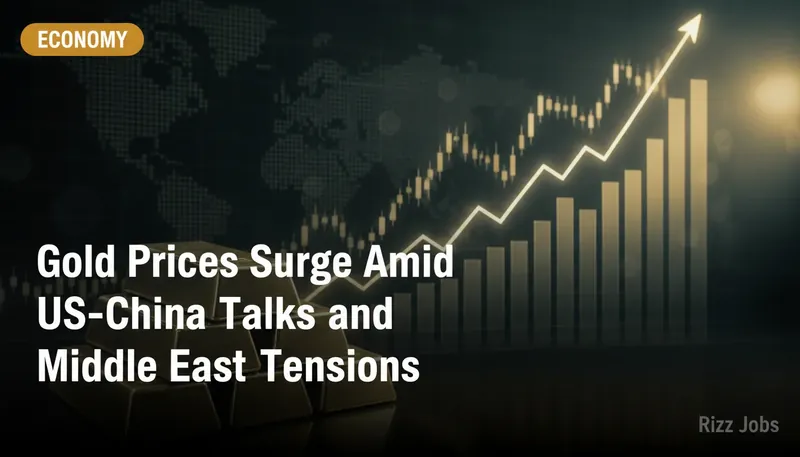
In a significant development for global markets, gold prices have seen an uptick as investors keenly await the outcome of pivotal discussions between U.S. President Donald Trump and Chinese President Xi Jinping. These talks are expected to address ongoing trade tensions that have cast a shadow over global economic growth. Meanwhile, geopolitical uncertainties in the Middle East, particularly the fragile ceasefire negotiations with Iran, continue to influence market dynamics.
The anticipation surrounding the U.S. Consumer Price Index (CPI) data release is also adding to the market's volatility. This data is crucial for investors as it will provide insights into the Federal Reserve's future interest rate decisions. A higher-than-expected CPI could signal potential rate hikes, which traditionally strengthen the dollar and put pressure on gold prices. Conversely, lower CPI figures might bolster gold as a safe-haven asset, especially amidst geopolitical instability.
For Indian investors, these developments hold particular significance. Gold has traditionally been a preferred investment in India, both as a hedge against inflation and as a cultural asset. The interplay between U.S.-China trade talks and Middle Eastern geopolitical tensions could lead to increased volatility in gold prices, presenting both risks and opportunities for Indian market participants.
Furthermore, the outcome of these international negotiations and economic indicators will likely influence the Reserve Bank of India's policy decisions, especially concerning inflation control and currency stabilization. As global markets respond to these events, Indian investors should remain vigilant, assessing how these external factors might impact domestic economic conditions and investment strategies.