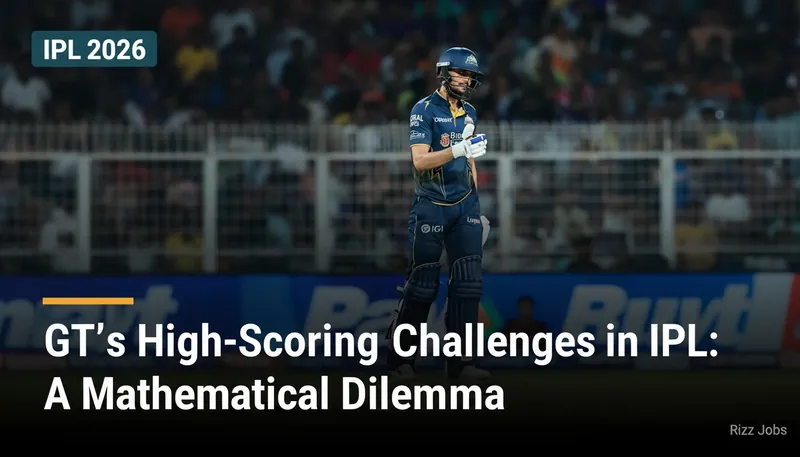
In the high-octane world of the Indian Premier League (IPL), where every run counts and strategies are scrutinized under the microscope, the Gujarat Titans (GT) find themselves grappling with a unique challenge. The team, known for its aggressive gameplay, recently faced a setback when they fell 29 runs short of the Kolkata Knight Riders' (KKR) daunting target of 247 runs. This outcome has sparked a debate about GT's ability to chase high scores, with cricket analyst Sanjay Bangar pointing out that targets exceeding 225 runs could prove detrimental to their campaign.
The IPL, a lucrative cricketing extravaganza, is not just about the sport; it is a significant economic engine, influencing everything from sponsorship deals to merchandise sales. For GT, consistently failing to meet high targets could impact their marketability and fan engagement, which are crucial for their financial health. The team's performance on the field directly correlates with its valuation off the field, affecting investor confidence and sponsorship deals.
Bangar's analysis highlights a critical aspect of T20 cricket—while the format is designed for high-scoring games, there is a threshold beyond which even the most formidable teams struggle. For GT, the challenge lies in balancing their aggressive batting strategy with the need for a robust bowling attack that can restrict opponents to manageable totals. This balance is not just a tactical necessity but a financial imperative, as consistent performance is key to maintaining and enhancing the team's brand value.
As the IPL progresses, GT's management will need to reassess their strategies, focusing on strengthening their bowling lineup and possibly recalibrating their batting order to ensure they can effectively chase or set high targets. The outcome of these strategic decisions will not only influence their standing in the league but also their financial prospects in the competitive world of sports business.
For investors and business stakeholders, GT's ability to overcome these challenges will be a critical factor in determining the team's long-term viability and success in the IPL ecosystem.