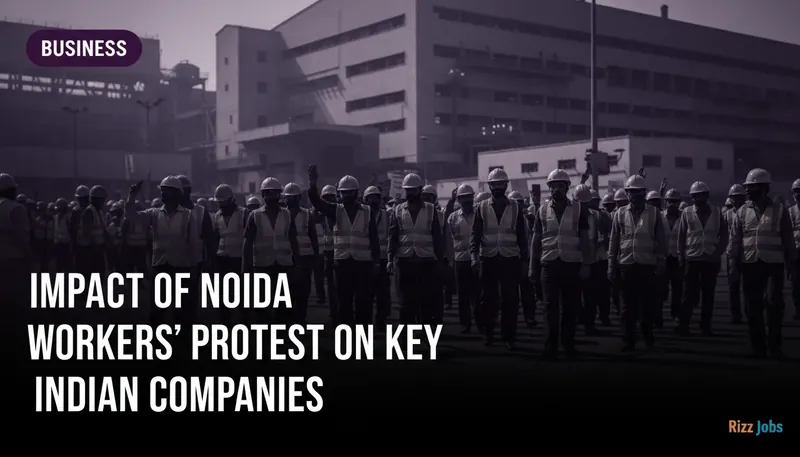
The recent workers' protest in Noida has cast a spotlight on the operational vulnerabilities of several major Indian companies, including Tata Motors and Dixon Technologies. As labor unrest intensifies, these companies face immediate challenges that could disrupt their supply chains and affect production timelines. The protests, primarily driven by demands for better wages and improved safety conditions, underscore the critical dependence of these industries on shop-floor labor. For Tata Motors, a significant player in the automotive sector, any disruption in production can have cascading effects on its supply chain, potentially affecting its market share in the highly competitive automobile industry. Similarly, Dixon Technologies, a key player in electronics manufacturing, could see delays in fulfilling orders, impacting its reputation and customer relationships.
The broader implications of these protests extend beyond individual companies. They highlight systemic issues within the manufacturing sector, where labor costs and safety standards are increasingly becoming focal points of concern. For investors, this unrest signals potential volatility in sectors heavily reliant on manual labor, prompting a reevaluation of risk management strategies. Companies might need to invest more in automation and enhance labor relations to mitigate future disruptions.
Moreover, these events could influence policy discussions at a governmental level, potentially leading to reforms aimed at improving labor conditions across the country. As the protests continue, stakeholders from various sectors will be closely monitoring the developments, assessing both immediate impacts and long-term implications on India's industrial landscape.


