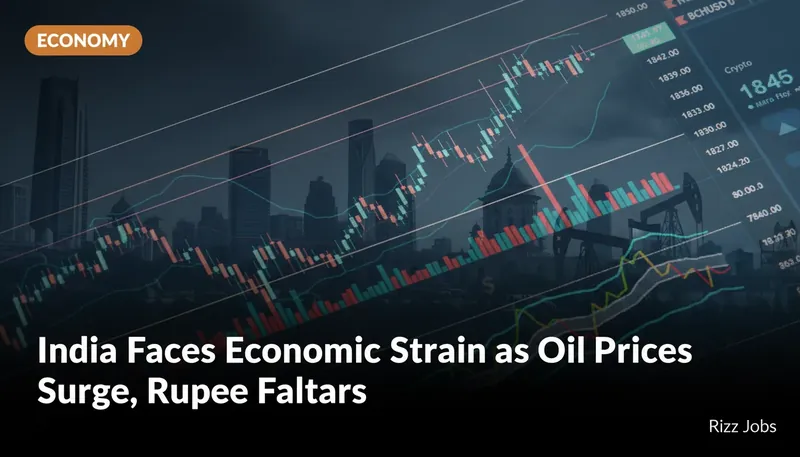
India is grappling with significant economic challenges as the rupee faces mounting pressure from escalating oil prices, a consequence of the ongoing Middle East conflict. The depreciation of the rupee is not just a currency issue but a broader economic concern, threatening India's aspirations to ascend as the world's third-largest economy. The surge in oil prices has amplified the cost of imports, exacerbating the trade deficit and placing additional strain on the nation's foreign exchange reserves. This situation has prompted the Reserve Bank of India (RBI) to consider various measures to stabilize the currency and mitigate inflationary pressures.
As the world's third-largest oil importer, India is particularly vulnerable to fluctuations in global oil prices. The recent spike has led to increased costs for businesses and consumers alike, potentially slowing down economic growth. The government is under pressure to manage the situation without derailing its fiscal plans or compromising its growth targets. Analysts suggest that the RBI may need to intervene more aggressively in the foreign exchange market or consider policy rate adjustments to curb inflation.
The depreciation of the rupee also poses a risk to foreign investments, as investors may seek safer havens amid currency volatility. This could impact India's capital inflows, which are crucial for funding its current account deficit. Moreover, the weakening rupee could lead to higher borrowing costs for Indian companies with foreign currency debt, further straining corporate balance sheets.
In response, the government is exploring options to diversify its energy sources and reduce dependency on oil imports. This includes accelerating the adoption of renewable energy and enhancing domestic oil production. However, these are long-term strategies that may not provide immediate relief.
Overall, the current economic scenario underscores the need for a balanced approach that addresses short-term currency stabilization while laying the groundwork for sustainable economic growth.