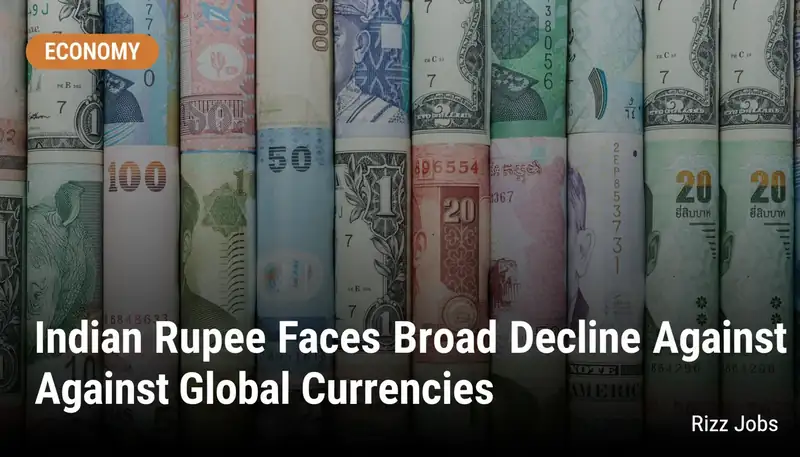
In the past year, the Indian rupee has experienced a substantial depreciation against nine major global currencies, reflecting a broader trend beyond its decline against the US dollar. This depreciation, which has reached up to 25% in some cases, is largely attributed to rising crude oil prices and significant foreign investor outflows. The rupee's weakness is particularly pronounced against the Australian dollar and the Chinese yuan, highlighting its vulnerability in the face of global economic shifts.
The Indian economy, heavily reliant on oil imports, has been grappling with escalating oil prices, which have put additional pressure on the rupee. As oil prices surge, the cost of imports rises, leading to a higher current account deficit and exerting downward pressure on the currency. Furthermore, geopolitical tensions and global economic uncertainties have prompted foreign investors to withdraw capital from Indian markets, further exacerbating the rupee's decline.
Experts suggest that the rupee is likely to remain volatile in the near term, with its trajectory closely tied to fluctuations in oil prices and geopolitical developments. This volatility poses challenges for Indian businesses and investors, particularly those engaged in international trade. Companies with significant foreign currency exposure may face increased costs, while investors may need to reassess their currency risk management strategies.
For Indian policymakers, stabilizing the rupee is a pressing concern. The Reserve Bank of India (RBI) may need to consider measures such as foreign exchange interventions or adjustments in interest rates to curb excessive volatility. However, such interventions must be carefully calibrated to avoid unintended consequences on inflation and economic growth.
As the rupee navigates these turbulent waters, Indian businesses and investors must stay vigilant, adapting to the evolving economic landscape and leveraging opportunities for growth amidst challenges.