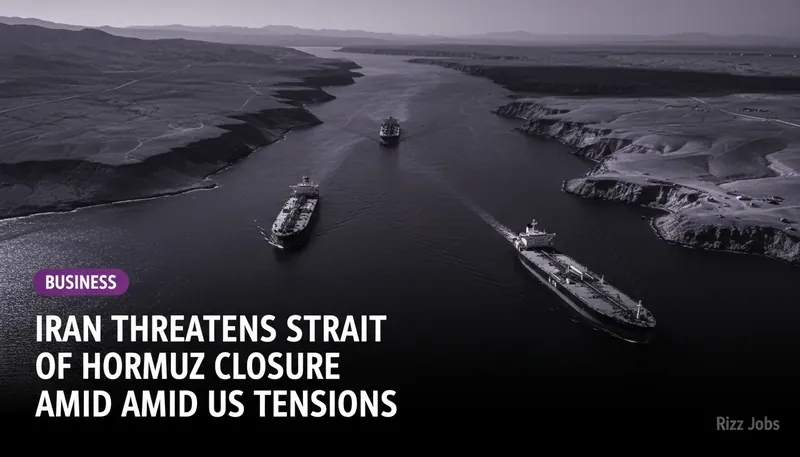
In a significant geopolitical development, Iran's Parliament Speaker, Mohammad Bagher Ghalibaf, has issued a stern warning regarding the strategic Strait of Hormuz. Ghalibaf declared that the vital maritime passage could be closed if the United States persists with what Tehran perceives as a naval blockade. This statement underscores escalating tensions in the region, which could have far-reaching implications for global oil supply and international trade routes.
The Strait of Hormuz is a crucial artery for the global oil market, with approximately 20% of the world's petroleum passing through this narrow channel. Any disruption could lead to significant fluctuations in oil prices, affecting economies worldwide, including India, which relies heavily on oil imports. Indian investors and businesses should closely monitor these developments as they could impact energy costs and inflation.
Iran's rhetoric comes amidst heightened hostilities with the United States, following a series of sanctions and military maneuvers in the region. The potential closure of the Strait of Hormuz could serve as a strategic leverage point for Iran, aiming to pressure the US into reconsidering its stance. However, such a move would likely provoke international backlash and could escalate into a broader conflict, further destabilizing the Middle East.
For Indian businesses, especially those in the energy and shipping sectors, this situation demands vigilance. Companies should prepare for possible supply chain disruptions and consider hedging strategies to mitigate risks associated with volatile oil prices. Additionally, the Indian government may need to reassess its energy security strategies to ensure a stable supply of crude oil.
In conclusion, while the Strait of Hormuz remains open for now, the geopolitical tensions surrounding it highlight the interconnectedness of global markets and the potential for regional conflicts to have widespread economic repercussions. Stakeholders in India and beyond must stay informed and ready to adapt to these dynamic geopolitical shifts.


