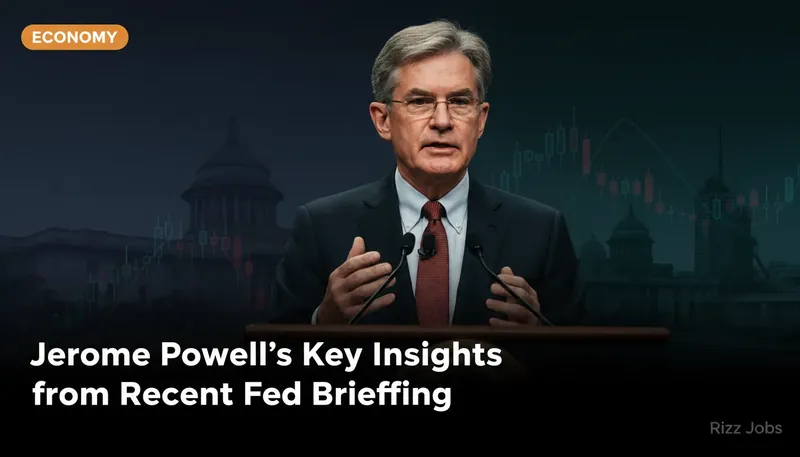
In a recent press briefing, Federal Reserve Chair Jerome Powell addressed several pivotal topics that hold significant implications for both the global and Indian economies. Powell's remarks were particularly noteworthy as they came at a time when the world is closely watching the Fed's moves amidst ongoing economic uncertainties. One of the key takeaways from the briefing was Powell's assertion that there is no 'shadow Fed Chair' influencing decisions, a statement aimed at quelling rumors of external pressures on the Fed's policy-making process. This is crucial for maintaining the credibility and independence of the Federal Reserve, which is vital for global financial stability.
Powell also drew parallels with the economic landscape of 1992, a period marked by significant economic challenges. By referencing this era, Powell highlighted the importance of learning from past economic fractures to navigate current challenges effectively. For Indian investors and businesses, understanding these historical contexts can provide insights into potential future market dynamics and policy directions.
Moreover, Powell's comments on inflation and interest rate adjustments are of particular interest to Indian stakeholders. As India grapples with its own inflationary pressures, the Fed's stance could influence the Reserve Bank of India's policy decisions, impacting everything from loan interest rates to corporate borrowing costs.
Overall, Powell's briefing underscores the interconnectedness of global economies and the ripple effects that U.S. monetary policy can have on emerging markets like India. Indian investors would do well to monitor these developments closely, as they could have far-reaching implications for investment strategies and economic forecasts.