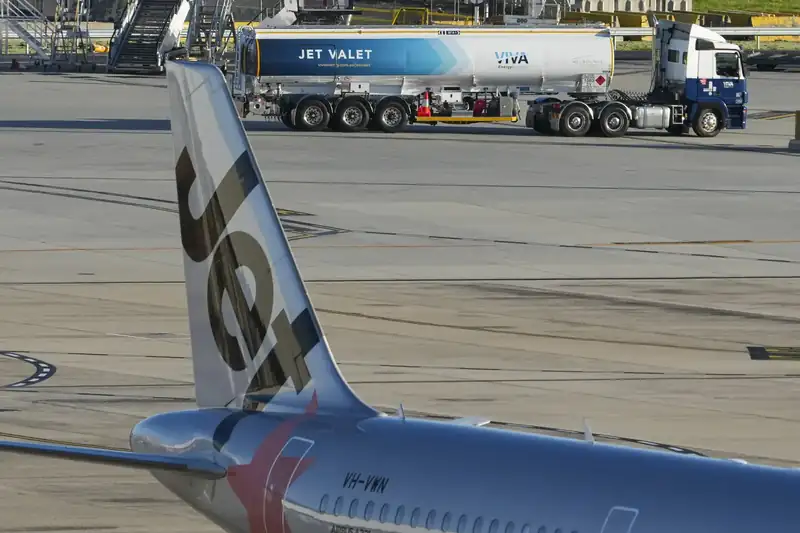
Shares of JetBlue fell 9% in morning trading as the airline grapples with rising fuel costs, exacerbated by the U.S.-Israeli attack on Iran that closed the critical Strait, a vital route for nearly a fifth of global oil and gas supplies.
Jet fuel prices, which had averaged about $85 to $90 a barrel before the February strikes, surged to nearly $142 per barrel by the last week of May, according to the International Air Transport Association. This volatility has prompted airlines worldwide to increase passenger fares and baggage fees, as well as reduce flight frequency and routes to manage fuel usage.
Smaller carriers like JetBlue are particularly pressured due to their limited financial flexibility. JetBlue had already suspended its full-year outlook in April, announcing plans to slow hiring, cut capacity, and raise fares. The airline now anticipates fuel costs to be between $4.26 and $4.36 per gallon in the second quarter, up from an earlier forecast of $4.13 to $4.28.
“However, this guide was underwritten using the May 22 Brent forward curve, which has since improved.”
Savanthi Syth, Raymond James Analyst
Despite the challenges, JetBlue expects to recapture 40% or more of the increased fuel costs this quarter, aided by consistent operational performance. The airline also raised its revenue growth forecast per available seat mile to a range of 9% to 12%, up from the previous 7% to 11%.
JetBlue reported outperforming in routes previously operated by Spirit Airlines, which ceased operations, and is beginning to fill the void left by Spirit, particularly in Fort Lauderdale, Florida.
Background
The ongoing geopolitical tensions and their impact on oil prices highlight the vulnerability of the airline industry to external shocks. Airlines are forced to adapt quickly to mitigate financial impacts, with smaller carriers facing more significant challenges.
Looking ahead, JetBlue's ability to manage fuel costs and capitalize on new market opportunities will be crucial. Investors and industry watchers will be keen to see how the airline navigates these turbulent times and adjusts its strategies in response to evolving market conditions.