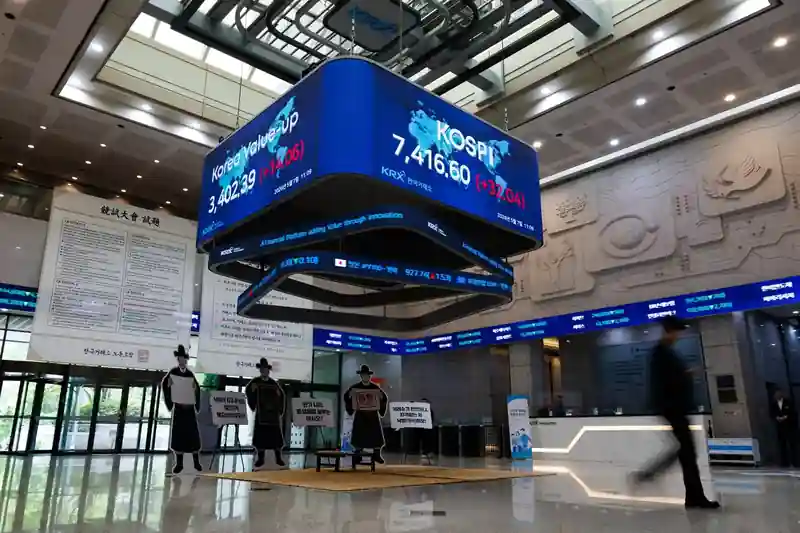
Hedge fund Golden Horse Fund Management and M&G Investments are adjusting their strategies amid growing caution in the Korean market. Golden Horse has trimmed exposure and added derivative protection, while M&G has diversified its holdings beyond memory and foundry stocks to tap into the broader AI supply chain.
The moves by these funds underscore the challenges faced by global money managers. Despite the strong performance of Samsung Electronics Co. and SK Hynix Inc., which have driven the Kospi’s more than 90% rise this year, investors are becoming more selective about new investments. The recent selloff in US tech stocks, driven by fears of rising interest rates, highlights the potential for rapid market shifts that could impact Korean stocks when local markets open.
Yi Ling Ong, managing partner at Golden Horse Fund, noted that the fund has been reducing gross exposure and adding derivative protection. This strategy is in anticipation of several large IPOs, including a SpaceX listing, which could lead to a rotation as funds raise cash to participate. The Kospi index, which has benefited from the AI boom and corporate reforms, tumbled 7% at one point on Friday, indicating market vulnerability.
“We’ve been trimming gross exposure at the margin and layering derivative protection over the last few weeks.”
Yi Ling Ong, Managing Partner at Golden Horse Fund
The derivatives market reflects this caution, with investors seeking protection against declines. Tanvir Sandhu, global chief derivatives strategist at Bloomberg Intelligence, observed that options activity in the EWY ETF indicates a shift from upside exposure to downside protection. Meanwhile, some investors are exploring opportunities beyond Samsung and SK Hynix, focusing on companies that support AI infrastructure.
Despite these adjustments, the rotation does not imply a bearish outlook on Korea. The Kospi remains attractively valued compared to Taiwan, trading at 8.6 times forward earnings versus Taiwan's 20 times. The earnings upgrade cycle is broadening, with the rest of the Kospi expected to deliver over 50% profit growth this year, up from 20% in January.
“The debate isn’t whether the Kospi story remains attractive — it’s how to stay invested without giving back a portion of the gains.”
Tanvir Sandhu, Global Chief Derivatives Strategist at Bloomberg Intelligence
Background
Over the past year, Korean stocks have gained global attention due to the AI boom and successful corporate reforms, propelling the Kospi index to new highs. However, the extended rally has led to crowding in a few major players, making the market susceptible to abrupt reversals.
Looking ahead, the market faces potential volatility due to foreign outflows and rising retail leverage. Global funds have withdrawn a record $76 billion this year, and the popularity of leveraged ETFs could amplify market swings. Investors should monitor these dynamics closely as they could impact the stability of the Korean market.