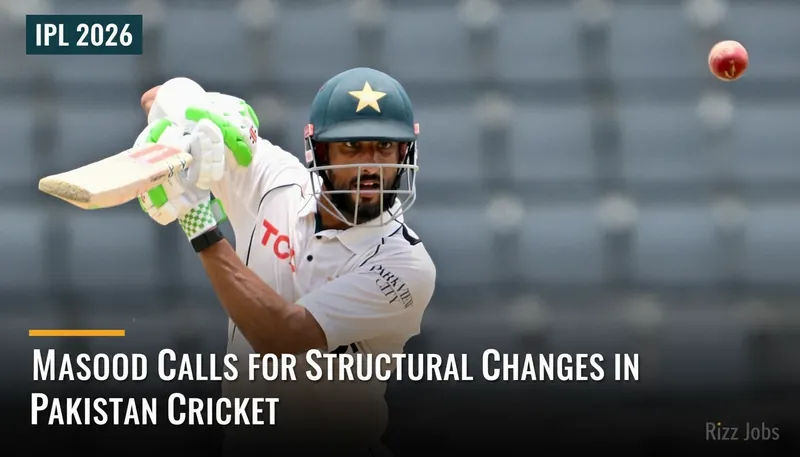
In the wake of Pakistan's recent series loss to Bangladesh, captain Shan Masood has left his captaincy future in the hands of the Pakistan Cricket Board (PCB), while strongly advocating for structural changes within the team. This call for introspection comes after a string of disappointing performances in Test cricket, which have left fans and analysts questioning the team's strategic direction. Masood's comments highlight a need to address persistent issues that have plagued the team, such as inconsistent batting and lackluster fielding, which have contributed to their underwhelming performances on the international stage.
Masood's appeal for change is not just about the immediate tactical adjustments but also about overhauling the underlying systems that support player development and team strategy. He emphasized the importance of identifying and rectifying the 'root causes' of their failures, which may include revisiting coaching methodologies, player selection processes, and even the domestic cricket structure that feeds talent into the national team.
For Indian investors and business readers, this scenario presents an intriguing parallel to corporate governance and strategic restructuring. Just as companies must adapt to changing market conditions and rectify internal inefficiencies to remain competitive, sports teams must evolve to maintain their standing on the international stage. The PCB's response to Masood's call could set a precedent for how sports organizations in the region approach systemic change, potentially influencing sponsorship deals, broadcasting rights, and overall marketability of the sport.
As the cricketing world watches closely, the PCB's next steps will be critical not only for the future of Pakistan cricket but also for its financial implications. A successful restructuring could revive the team's fortunes and enhance its appeal to sponsors and broadcasters, while failure to act might result in continued decline, affecting revenue streams and fan engagement.