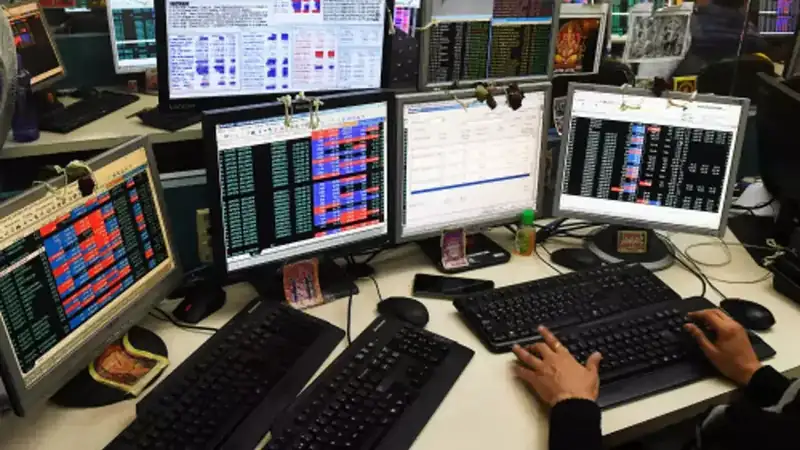
The NSE Nifty and BSE Sensex experienced significant declines on Friday, with the Nifty closing at 23,547.75, down 1.5%, and the Sensex ending at 74,775.74, down 1.4%. The market downturn was primarily driven by MSCI index rebalancing and uncertainties surrounding a US-Iran ceasefire deal.
Both indices were poised for modest gains before a late-session sell-off triggered by MSCI rebalancing, which led to outflows of ₹8,000-8,500 crore. This adjustment affected stocks like Bajaj Finance, HUL, and TCS. The rebalancing process requires passive funds to adjust their holdings in line with new index weights.
The MSCI Standard Index saw additions of Federal Bank, MCX, Nalco, and Indian Bank, while Hyundai Motor India, Jubilant FoodWorks, Kalyan Jewellers, and RVNL were excluded. Despite these changes, India's weight in the index remains stable at around 12%.
“The MSCI rebalancing led to outflows worth ₹8,000-8,500 crore, which were slightly higher than previous instances, but that was due to float adjustments in certain names like Bajaj Finance, HUL, TCS, and many others.”
Abhilash Pagaria, head of alternative and quantitative research, Nuvama Wealth
All sectoral indices, except IT, ended lower, with Nifty Oil & Gas dropping 2.5% and Nifty Metal and Auto indices falling around 2%. The Nifty Midcap 150 and Smallcap 250 indices also declined by 1.4% and 0.7%, respectively.
The India VIX volatility index rose 8% to 16.2, indicating heightened market uncertainty. Foreign investors sold shares worth Rs 21,105.9 crore on Friday, while domestic institutional investors purchased shares worth Rs 16,764.1 crore.
“The deal for extension of ceasefire between the US and Iran is not yet signed and it doesn't seem that either of them is in a hurry to sign the deal either.”
UR Bhat, cofounder and director, Alphaniti
Market sentiment was further dampened by the unresolved US-Iran ceasefire deal, which could impact oil prices. Brent crude futures eased by 2% to nearly $90 on Friday.
Background
The MSCI index rebalancing is a periodic adjustment that can lead to significant market movements as passive funds realign their portfolios. Additionally, geopolitical tensions, such as the US-Iran ceasefire negotiations, can have substantial impacts on global markets, particularly through oil price fluctuations.
As the market grapples with these developments, investors should monitor the ongoing US-Iran negotiations and potential impacts on oil prices. The MSCI rebalancing effects may continue to influence market movements in the short term.