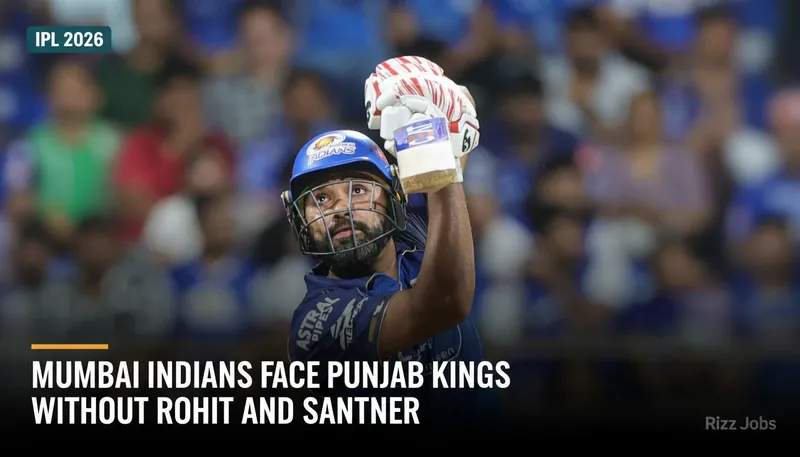
In a strategic reshuffle, the Mumbai Indians have opted to rest key players Rohit Sharma and Mitchell Santner for their clash against the Punjab Kings. The decision comes as the team aims to balance player workload with the demands of a grueling Indian Premier League (IPL) season. Quinton de Kock, a seasoned wicketkeeper-batsman, has been brought in for his first appearance this season, adding depth to Mumbai's batting lineup. This move is seen as a tactical one, potentially offering Mumbai Indians an edge with de Kock's aggressive batting style, which could be pivotal in their quest for victory.
The absence of Sharma, the team's captain, raises questions about leadership on the field, but it also provides an opportunity for other players to step up and showcase their leadership skills. Santner's exclusion could impact the bowling department, but Mumbai Indians have a robust squad capable of adapting to such changes. This match is crucial for both teams as they vie for a spot in the playoffs, making every strategic decision significant.
For investors and stakeholders in the IPL ecosystem, such team changes can have broader implications. Player performances can influence merchandise sales, sponsorship deals, and even team valuations. The IPL remains a significant revenue generator in the sports industry, with its business model closely watched by investors looking to capitalize on the growing sports market in India. As the season progresses, team dynamics and player performances will continue to be pivotal in shaping the financial outcomes for franchises and their stakeholders.