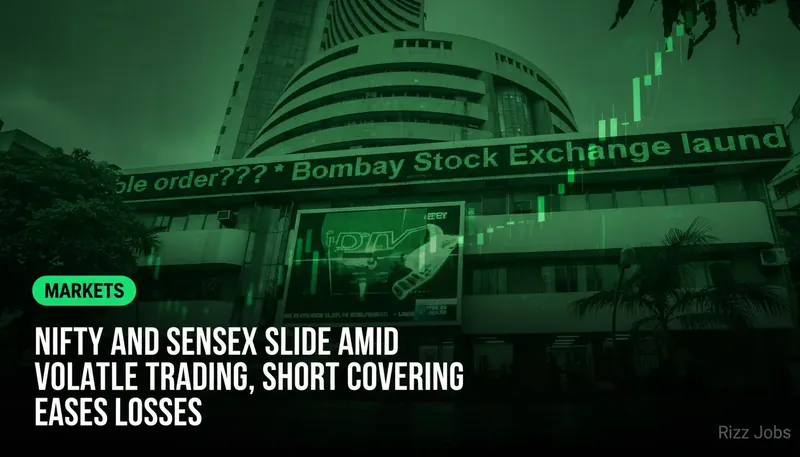
In a turbulent session for Indian equities, both the Nifty and Sensex witnessed significant declines, only to pare some losses by the close of trading. The Nifty index fell by 207 points, or 0.9%, settling at 23,842, while the Sensex dropped 702 points, or 0.9%, to finish at 76,847. Earlier in the day, both indices had plunged by as much as 2%, reflecting heightened market volatility. The downturn was attributed to a mix of global economic uncertainties and domestic factors, including profit booking and caution ahead of a market holiday.
Short covering played a crucial role in limiting the extent of the declines. As traders adjusted their positions, covering some of their bearish bets, it provided a cushion against further losses. This activity was particularly notable given the looming financial markets holiday, which often prompts traders to reassess their portfolios to avoid exposure during non-trading periods.
The market's performance underscores the fragile sentiment prevailing among investors, who are grappling with a confluence of factors such as inflationary pressures, geopolitical tensions, and fluctuating commodity prices. Analysts suggest that while short covering provided temporary relief, the underlying concerns remain unresolved, potentially setting the stage for continued volatility.
For investors, the current environment demands a cautious approach, with an emphasis on risk management and diversification. As global and domestic economic indicators evolve, market participants will be closely monitoring policy announcements and corporate earnings, which could provide further direction. The resilience of the Indian markets, despite recent setbacks, highlights the importance of strategic planning and informed decision-making in navigating these challenging times.