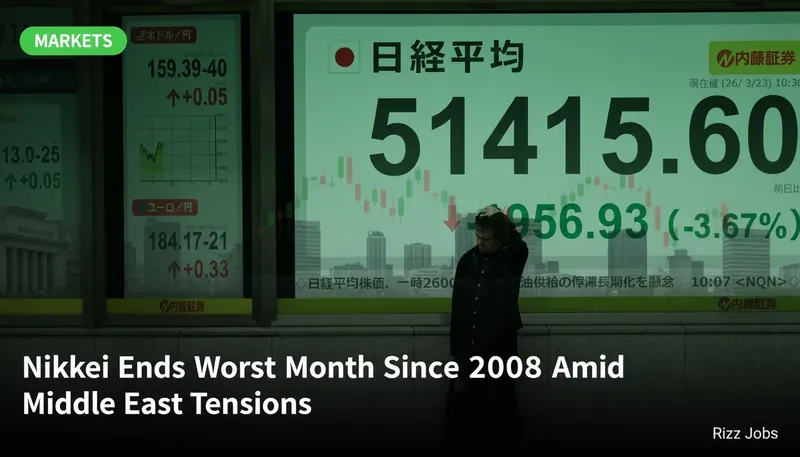
In a stark reminder of the interconnectedness of global markets, Japan's Nikkei 225 index has concluded its most challenging month since the 2008 financial crisis. The index fell for the fourth consecutive day on Tuesday, driven by escalating tensions in the Middle East that have unnerved investors worldwide. October's performance saw the Nikkei tumble as geopolitical uncertainties, particularly the ongoing conflict in the Middle East, cast a long shadow over market sentiment.
The situation in the Middle East has fueled concerns about potential disruptions in global oil supplies, leading to volatility across various asset classes. For Indian investors, this development is a double-edged sword. On one hand, the potential rise in oil prices could inflate India's import bill, exerting pressure on the rupee and widening the trade deficit. On the other hand, the volatility presents opportunities for strategic investments in sectors like energy and defense.
The broader implications for the global economy cannot be ignored. A prolonged conflict could lead to sustained high oil prices, which may stoke inflationary pressures worldwide, prompting central banks to reconsider their monetary policies. For India, this could mean a more cautious approach from the Reserve Bank of India regarding interest rate adjustments.
Furthermore, the Nikkei's decline underscores the fragility of investor confidence in the face of geopolitical instability. As global markets react to these uncertainties, Indian investors are advised to maintain a diversified portfolio and consider hedging strategies to mitigate risks associated with such external shocks.
In conclusion, while the immediate impact of the Middle East crisis is evident in Japan's stock market, its ripple effects are likely to be felt across the global financial landscape, including India. Investors should stay informed and agile, ready to adapt to the rapidly changing market dynamics.