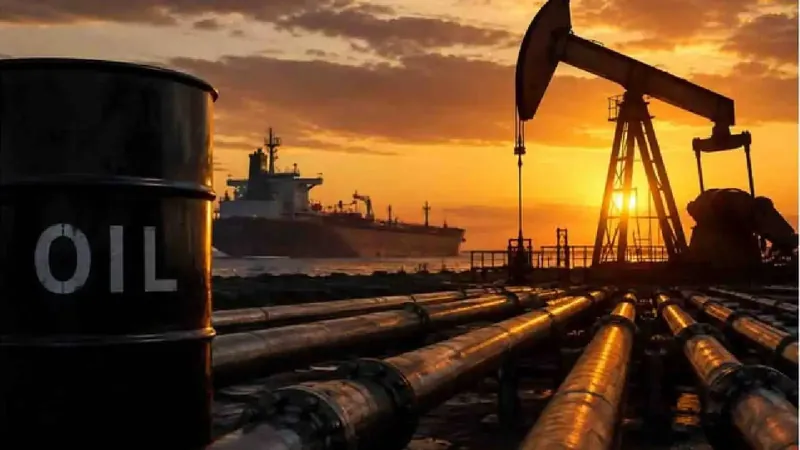
Crude oil prices have seen a significant decline as the market reacts to ongoing developments in the Strait of Hormuz. On August 26, Brent crude futures dropped $2.35, or 2.65%, to $86 a barrel, while U.S. West Texas Intermediate crude futures fell $1.94, or 2.36%, to $80.42. This decline follows a more than 3% drop in both benchmarks on Tuesday, driven by hopes for progress in talks between Iran and Oman.
Iran has announced the resumption of discussions with Oman over managing the Strait of Hormuz, a critical waterway for global oil and liquefied natural gas shipments. The talks come as Iran faces increased economic pressure from the U.S., with President Donald Trump expanding sanctions aimed at curtailing Iran's economic activities. The two nations have been negotiating a joint temporary navigational corridor through the Strait and have agreed to clear it of mines.
The situation remains tense as an oil tanker was reportedly hit by an unidentified projectile near Oman's Ash Shishah, close to the Strait's entrance. This incident underscores the fragile security environment in the region, which could further impact oil prices.
Market analysts are closely monitoring the duration of these disruptions. JPMorgan estimates that each additional month of disruption could add $7 to $8 per barrel to Brent prices. If the disruptions persist for three months, Brent prices could average around $114 a barrel. Goldman Sachs has also warned that Brent could rise to $120 a barrel if shipping disruptions continue.
Despite the current tensions, Goldman Sachs maintains a base case where Middle East tensions ease, forecasting Brent to average $80 a barrel in the fourth quarter and $75 a barrel next year. However, risks remain tilted to the upside, with potential prolonged disruptions through the Strait of Hormuz and the Red Sea.
Background
The Strait of Hormuz is a vital chokepoint for global oil shipments, accounting for one-fifth of the world's oil and liquefied natural gas transit before recent conflicts. The geopolitical tensions in this region have historically had significant impacts on global oil prices, influencing market stability and economic forecasts.
As the situation unfolds, market participants will be watching for any developments in the Iran-Oman talks and the impact of U.S. sanctions. The resolution of these geopolitical tensions will be crucial in determining the future trajectory of oil prices.