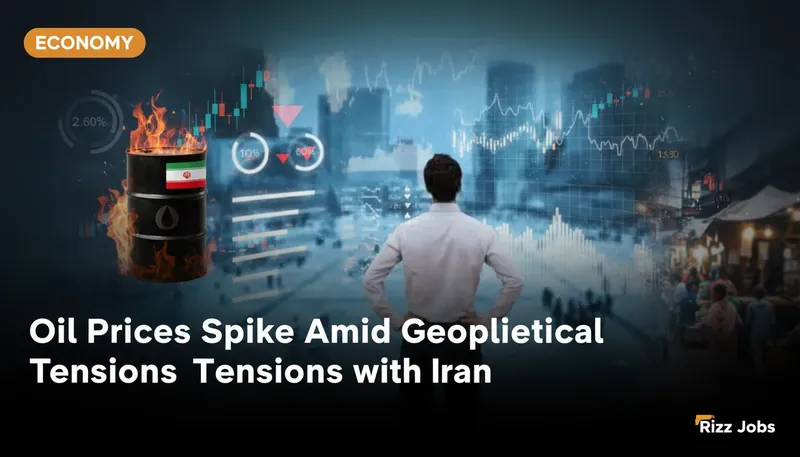
In a significant development that has reverberated across global financial markets, oil prices have surged as geopolitical tensions escalate in the Middle East, particularly concerning Iran. This uptick in oil prices has been accompanied by a notable decline in stock markets, reflecting investors' anxiety over potential disruptions in oil supply and broader economic implications. The price of Brent crude, a global benchmark, has climbed sharply, driven by fears that any military conflict involving Iran, a major oil producer, could constrict supply channels and lead to a spike in energy costs worldwide.
For Indian investors, these developments hold particular significance. India, as one of the largest importers of oil, could face increased import bills, potentially impacting the country's trade balance and inflation rates. The Reserve Bank of India (RBI) may need to reconsider its monetary policy stance if inflationary pressures mount due to rising fuel costs. Additionally, sectors heavily reliant on oil, such as transportation and manufacturing, could see their profit margins squeezed, affecting corporate earnings and stock valuations in these industries.
The stock market's reaction has been swift, with major indices experiencing a downturn as investors seek safer assets amid the uncertainty. The volatility underscores the interconnectedness of global markets and the sensitivity of financial systems to geopolitical events. Analysts suggest that while the immediate impact is significant, the long-term effects will depend on the duration and intensity of the tensions.
As the situation unfolds, investors are advised to monitor developments closely and consider diversifying their portfolios to mitigate risks associated with geopolitical volatility. The current scenario serves as a reminder of the importance of geopolitical risk assessment in investment strategies, particularly for those with exposure to energy-dependent sectors or emerging markets.