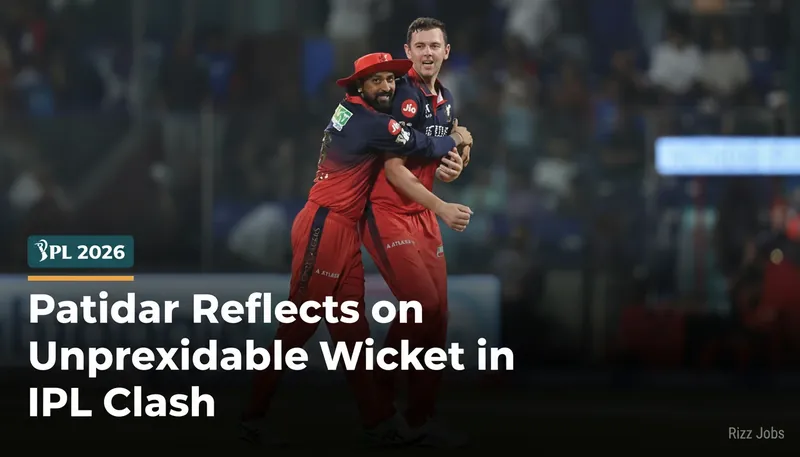
In a gripping encounter during the Indian Premier League, Rajat Patidar expressed his astonishment at the unpredictable nature of the pitch, which played a crucial role in the match's outcome. The game, which saw early dominance by the bowlers, was a testament to the strategic acumen required in the IPL. Josh Hazlewood, a key player, noted that the team capitalized on the early conditions, which were conducive to seam and swing, especially during the powerplay overs. This strategic advantage allowed them to put pressure on the opposition, setting the tone for the rest of the match.
The IPL, known for its high-stakes and dynamic gameplay, often sees pitches that challenge players' adaptability. For investors and business stakeholders, the performance of players like Patidar and Hazlewood can influence team valuations and sponsorship deals. The IPL's economic impact extends beyond the field, with significant implications for merchandise sales, broadcasting rights, and advertising revenues. As teams navigate these unpredictable conditions, their ability to adapt can drive both on-field success and off-field financial performance.
The game also highlighted the importance of player performance in the broader context of team strategy and marketability. As franchises invest heavily in player acquisitions, understanding pitch conditions and leveraging them effectively can enhance a team's competitive edge. This, in turn, can affect the franchise's brand value and its attractiveness to sponsors and investors.
In conclusion, the IPL continues to be a crucible of cricketing excellence and business strategy, where the unpredictability of the game mirrors the volatility of financial markets. Stakeholders must remain agile, adapting to both on-field dynamics and off-field opportunities to maximize returns.