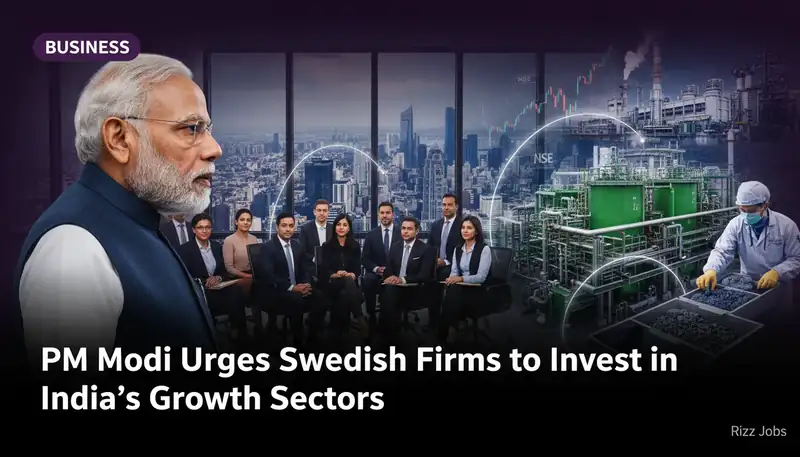
In a strategic move to bolster India's economic landscape, Prime Minister Narendra Modi has extended an invitation to Swedish companies to deepen their investment footprint in India. Addressing a gathering of Swedish business leaders, Modi emphasized the transformative potential of initiatives like 'Make In India', the National Green Hydrogen Mission, and the National Critical Mineral Mission. These initiatives are designed to not only enhance India's industrial capacity but also to align with global sustainability goals.
The 'Make In India' initiative, a flagship program of the Modi administration, aims to transform India into a global manufacturing hub. By inviting Swedish companies, known for their technological prowess and innovation, Modi is looking to infuse advanced manufacturing techniques and sustainable practices into Indian industries. This collaboration could lead to significant advancements in sectors such as automotive, pharmaceuticals, and electronics.
The National Green Hydrogen Mission is another focal point of Modi's pitch. As the world pivots towards cleaner energy sources, India is positioning itself as a leader in green hydrogen production. Swedish companies, with their advanced research and development capabilities, could play a pivotal role in accelerating India's green hydrogen ambitions, potentially leading to a reduction in carbon emissions and fostering energy security.
Furthermore, the National Critical Mineral Mission underscores India's commitment to securing essential minerals that are crucial for high-tech industries and renewable energy technologies. By partnering with Swedish firms, India aims to enhance its mineral exploration and processing capabilities, ensuring a steady supply chain for critical minerals.
For Indian investors and business leaders, this outreach to Swedish companies signals a robust opportunity for growth and collaboration in these key sectors. The potential influx of Swedish investment and technology could lead to increased industrial output, job creation, and a stronger position in the global market. As India continues to open its doors to international partnerships, the economic implications could be substantial, fostering a more resilient and diversified economy.


