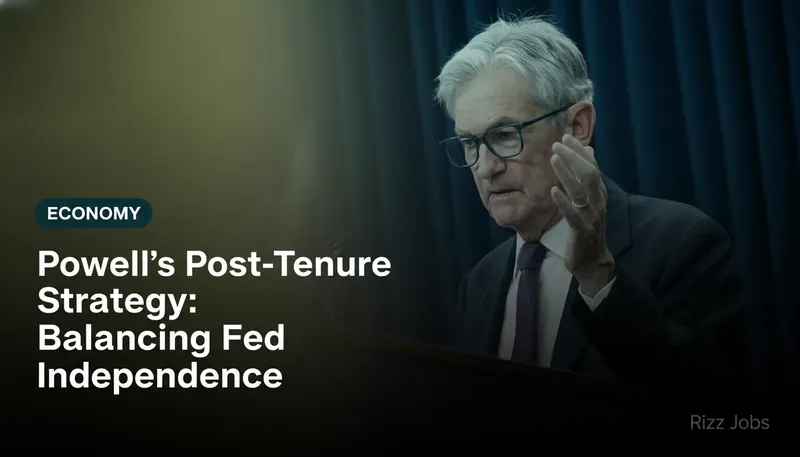
Jerome Powell, the current Chair of the Federal Reserve, has expressed his intention to remain on the board even after his term concludes. This decision comes amidst rising political tensions and aims to ensure the Federal Reserve's independence in an increasingly polarized environment. Powell's continued presence could provide stability to the Fed's policies, which have been pivotal in navigating the U.S. economy through turbulent times, including the COVID-19 pandemic and subsequent recovery efforts.
The move is seen as a strategic effort to shield the Federal Reserve from potential political interference, which has been a growing concern as partisan politics increasingly influence economic policy discussions. Powell's leadership has been marked by a focus on transparency and communication, crucial for maintaining market confidence. However, his decision to stay on could also lead to internal leadership conflicts, particularly if his successor holds differing views on monetary policy.
For Indian investors and business leaders, Powell's extended influence at the Fed is significant. The Federal Reserve's policies directly impact global financial markets, including India's, by influencing capital flows, exchange rates, and inflationary pressures. A stable Fed leadership under Powell could mean a more predictable monetary policy environment, which is beneficial for emerging markets like India. However, any potential conflicts within the Fed's leadership could lead to volatility, affecting investor sentiment and market stability.
In conclusion, Powell's decision to remain on the board is a double-edged sword. While it promises continuity and stability, it also poses risks of internal discord. Indian stakeholders should closely monitor developments at the Fed, as these will have far-reaching implications for global economic dynamics.