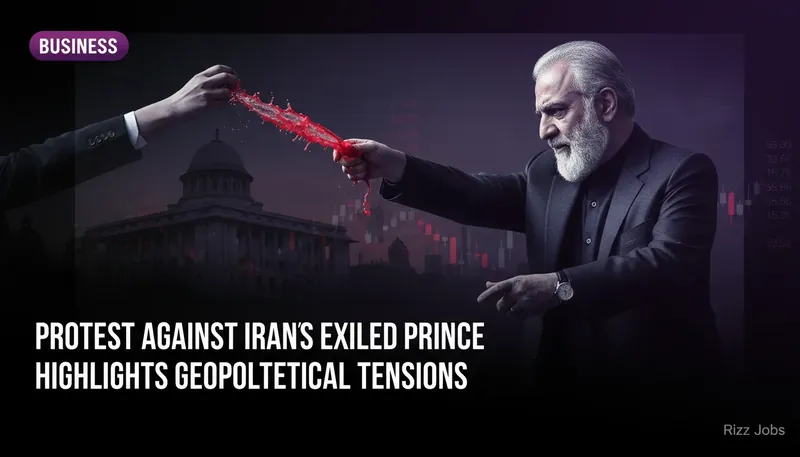
In a dramatic turn of events, Iran's exiled Crown Prince Reza Pahlavi became the target of a protester who splashed a red fluid on him during a public appearance. The incident, which took place amid heightened geopolitical tensions, underscores the volatile atmosphere surrounding the Iranian diaspora. Pahlavi, a prominent figure advocating for regime change in Iran, has been a vocal critic of the current Iranian government. His pro-war rhetoric has drawn both support and criticism, reflecting the deep divisions within the Iranian community abroad.
The protester's actions highlight the complexities of Iranian politics and the challenges faced by exiled leaders in garnering support for their causes. As the son of the last Shah of Iran, Pahlavi carries the legacy of a monarchy that was overthrown during the 1979 revolution. His calls for international intervention in Iran have been met with skepticism by some who fear the repercussions of military action.
For Indian investors and business leaders, this incident serves as a reminder of the intricate web of geopolitical factors that can influence global markets. Iran, a key player in the oil industry, plays a significant role in the global energy supply chain. Any instability in the region can have far-reaching implications for oil prices, which in turn affect inflation and economic growth worldwide.
Moreover, the protest against Pahlavi could have implications for international relations, particularly in how countries engage with the Iranian diaspora. As India continues to navigate its foreign policy with Iran, understanding the internal dynamics of Iranian politics becomes crucial. The event also underscores the importance of monitoring geopolitical developments that could impact India's energy security and economic interests.


