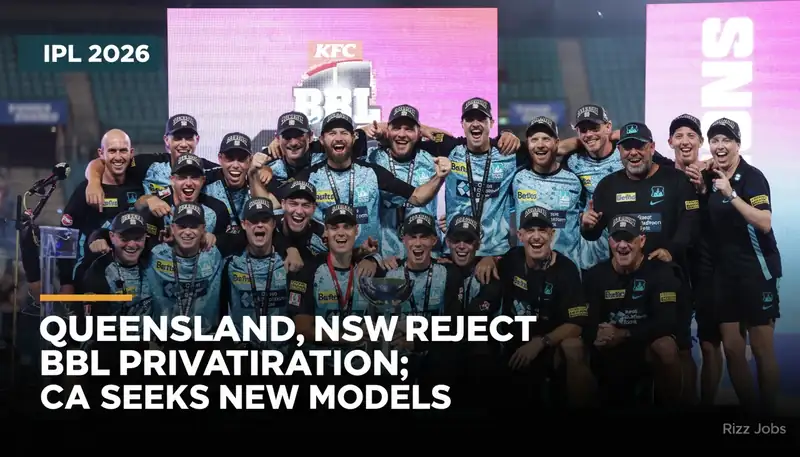
In a significant development for Australian cricket, both Queensland and New South Wales have voiced their opposition to the privatisation of the Big Bash League (BBL), a move that has prompted Cricket Australia (CA) to explore alternative models. The decision comes amid ongoing discussions about the future structure and financial sustainability of the BBL, one of the most popular domestic T20 leagues globally.
CA chief executive Todd Greenberg acknowledged the challenge of reaching a consensus among the six states, which is crucial for any significant restructuring. "It's difficult," Greenberg admitted, highlighting the complexities involved in aligning diverse interests. The rejection by two of the most influential states underscores the broader resistance within Australian cricket circles to the idea of privatisation, which has been seen as a potential avenue to inject fresh capital and commercial expertise into the league.
The BBL, launched in 2011, has grown into a major sporting event, drawing significant viewership and sponsorship. However, in recent years, questions have arisen about its financial model, especially in the face of competition from other T20 leagues like the Indian Premier League (IPL). The IPL's success has often been attributed to its privatised franchise model, which has attracted substantial investment from corporate giants and celebrities alike.
For Indian investors and business readers, the unfolding scenario in Australia offers a fascinating case study in sports management and the globalisation of cricket. The BBL's decision could influence how other leagues, including those in India, consider their own structures and financial strategies. The resistance to privatisation may also reflect broader cultural and operational differences between cricketing nations, offering insights into how cricket's commercial landscape might evolve.
As CA deliberates on alternative models, the focus will likely shift to finding a balance between maintaining traditional values and embracing modern commercial opportunities. This ongoing debate will be closely watched by stakeholders across the cricketing world, including broadcasters, sponsors, and investors, who are keen to see how the BBL navigates its future path.