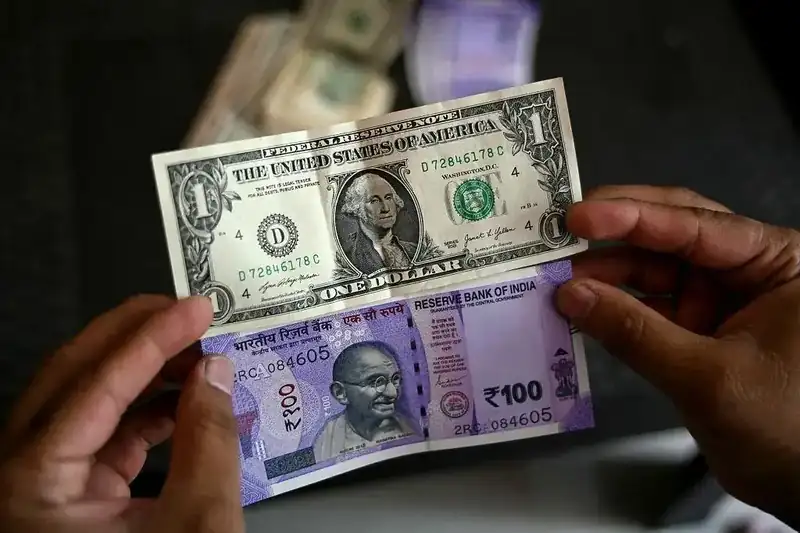
The Indian rupee experienced significant volatility in April-May 2026, hitting a low of 96.8/USD on May 20 due to rising crude oil prices, widening trade deficits, and foreign portfolio outflows. However, it has since recovered by 1.3% as of June 9, 2026, averaging around 94.7/USD during the first quarter of FY27.
Despite the pressures from elevated crude oil prices and a wider current account deficit, the rupee is expected to avoid a disorderly depreciation. This is attributed to stronger capital inflows, a favorable balance of payments outlook, substantial foreign exchange reserves, and continued intervention by the Reserve Bank of India (RBI).
The report from Motilal Oswal highlighted that India's external sector remained resilient in FY26, with the current account deficit contained at USD 25.4 billion (0.6% of GDP), slightly higher than USD 23.1 billion (0.6% of GDP) in FY25. However, the capital account weakened due to higher foreign portfolio investment outflows, despite an improvement in foreign direct investment to USD 4.2 billion in Q4FY26.
“The outlook for the rupee has improved meaningfully following the recent measures announced by the RBI and the government.”
Motilal Oswal Report
The overall balance of payments recorded a deficit of USD 23.6 billion in FY26, compared to a deficit of USD 5 billion in FY25. Nevertheless, a strong current account surplus of USD 7.1 billion in Q4FY26, along with RBI's dollar-rupee swap operations, resulted in a surplus of USD 7.2 billion in the final quarter, supporting foreign exchange reserves.
Looking at the services sector, the report projects net services receipts to rise to USD 245 billion (6% of GDP) in FY27 from USD 217 billion in FY26. Remittances are expected to remain robust at around USD 143 billion, increasing net invisibles to USD 338 billion (8.2% of GDP) from USD 312 billion (8.0% of GDP) in FY26.
Background
The rupee's recent stabilization is a result of strategic interventions by the RBI and government measures aimed at bolstering the currency. Historically, the rupee has faced challenges from external factors such as oil prices and global economic conditions, which continue to influence its trajectory.
Looking ahead, the rupee's performance will be closely monitored in light of ongoing global economic uncertainties. Stakeholders should watch for developments in crude oil prices, US monetary policy, and geopolitical tensions, which could impact the currency's stability.