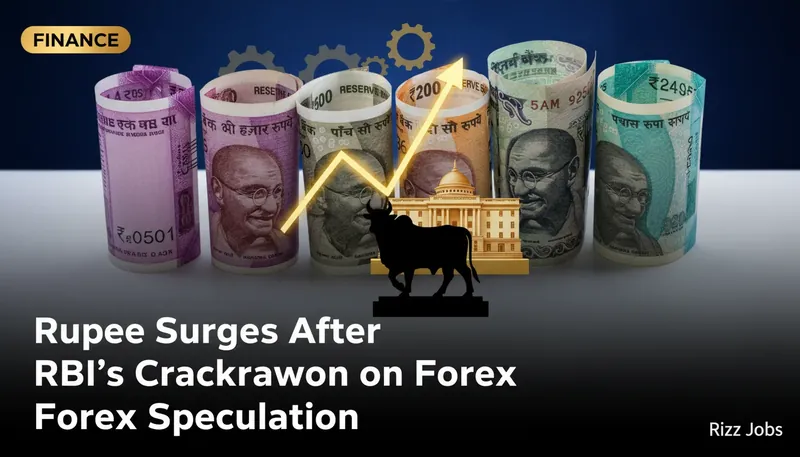
In a significant move that has reverberated across the financial markets, the Indian rupee recorded its sharpest single-day appreciation against the US dollar in over 12 years. This remarkable surge follows the Reserve Bank of India's (RBI) decisive actions to clamp down on offshore derivatives trading, a major contributor to recent currency volatility. The central bank's measures are aimed at curbing speculative activities that have put immense pressure on the rupee, which had been on a downward spiral due to a combination of global economic uncertainties and domestic fiscal challenges.
The RBI's intervention comes at a crucial juncture, as the rupee had been flirting with record lows, raising concerns about imported inflation and the widening trade deficit. By extending curbs on offshore derivatives, the RBI seeks to stabilize the currency and restore investor confidence. This move is expected to have far-reaching implications for foreign exchange markets, potentially leading to a recalibration of trading strategies among market participants.
For Indian investors and businesses, the rupee's appreciation offers a temporary respite from the inflationary pressures that have been exacerbated by a weak currency. Importers, in particular, stand to benefit from a stronger rupee, as it reduces the cost of imported goods and raw materials. However, exporters might face challenges as their products become relatively more expensive on the global stage.
Looking ahead, the sustainability of the rupee's strength will largely depend on the RBI's continued vigilance and the broader economic landscape. Global factors such as US Federal Reserve policies, geopolitical tensions, and oil price fluctuations will also play a critical role in determining the rupee's trajectory. As the RBI navigates these complex dynamics, its policy decisions will be closely watched by investors and analysts alike, who will be keen to assess the long-term impact on India's economic stability.