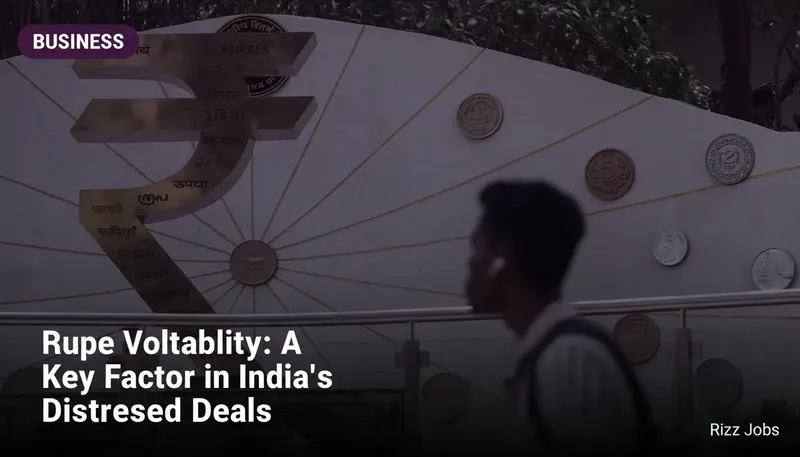
The Indian rupee's recent volatility has emerged as a pivotal factor in the landscape of distressed deals in India. As the currency fluctuates, companies with dollar-denominated debt find themselves in a precarious position, despite maintaining stable operational performance. This currency instability has led to heightened hedging costs and increased foreign exchange uncertainty, compelling investors and companies to rethink their strategies.
The impact of the rupee's swings is far-reaching, influencing the pricing, structure, and timelines of deals. Investors are increasingly gravitating towards assets that are linked to exports or have natural hedges against currency fluctuations. This trend highlights a shift in investment strategies, where the focus is on minimizing currency risk while maximizing returns.
For Indian firms, particularly those with significant exposure to foreign currencies, the cost of hedging has become a substantial consideration. Elevated hedging expenses can erode profit margins and make certain deals less attractive. As a result, companies are now prioritizing investments that offer built-in protection against currency volatility.
Furthermore, the uncertainty surrounding the rupee's future trajectory is prompting a reevaluation of deal timelines. Investors are more cautious, often opting for extended due diligence periods to better assess potential risks. This cautious approach is reshaping the dynamics of the deal-making process in India, where speed and agility were once the norm.
In conclusion, the rupee's volatility is not just a financial concern but a strategic one, influencing the very fabric of India's distressed deal market. As investors and companies navigate this challenging environment, those with a keen understanding of currency dynamics and a focus on export-oriented assets are likely to emerge as winners.


