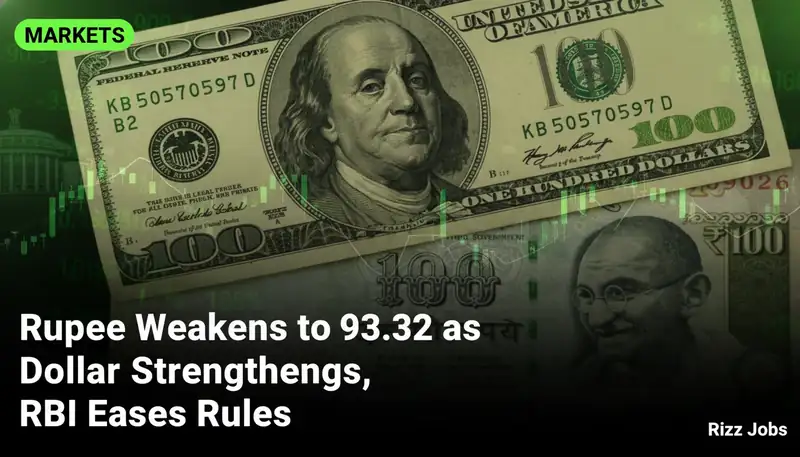
In the early trading hours today, the Indian rupee experienced a decline, dropping by 16 paise to settle at 93.32 against the US dollar. This movement comes as the American currency gains strength in global markets, a development that has put pressure on emerging market currencies, including the rupee. The Reserve Bank of India's recent decision to ease speculative betting restrictions has also played a role in this currency fluctuation.
The RBI's move is seen as a strategic attempt to curb excessive speculation and bring stability to the forex market. However, the timing coincides with a strengthening dollar, creating a challenging environment for the rupee. Analysts suggest that the RBI's intervention might provide long-term stability but could lead to short-term volatility as market participants adjust to the new regulations.
Despite these challenges, there are positive indicators for the Indian economy. Domestic equity markets have shown resilience, buoyed by foreign fund inflows, which have provided some support to the rupee. This influx of foreign capital is a testament to global investors' confidence in India's growth story, even amidst geopolitical uncertainties such as the ongoing peace agreement negotiations in West Asia.
The interplay between these factors highlights the complex dynamics influencing the rupee's valuation. For Indian investors and businesses, this serves as a reminder of the importance of staying informed about global economic trends and policy changes. As the rupee navigates these turbulent waters, stakeholders must remain vigilant and adaptable to mitigate risks and capitalize on opportunities.
Looking ahead, the rupee's trajectory will likely be influenced by further developments in US monetary policy, global economic recovery, and domestic economic indicators. Investors should monitor these factors closely as they make strategic decisions in the forex market.