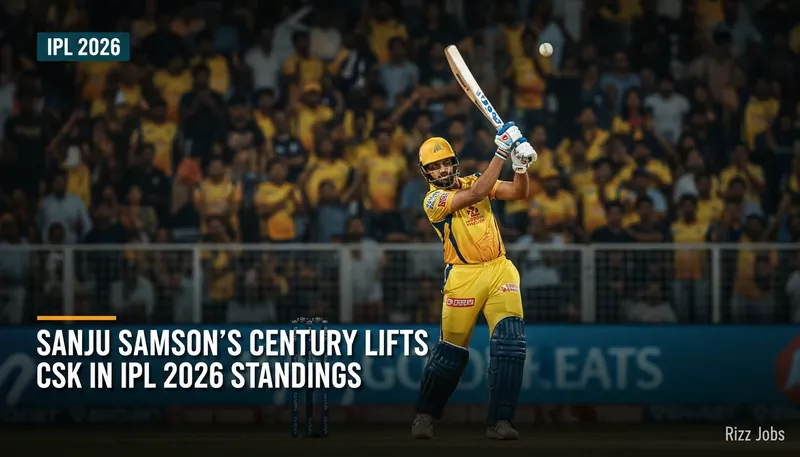
In a thrilling turn of events in the IPL 2026 season, Sanju Samson's spectacular century has propelled Chennai Super Kings (CSK) off the bottom of the points table. The wicket-keeper batter's performance was not only a personal milestone but also a significant boost for CSK, who have been struggling this season. Samson's innings against Delhi Capitals (DC) was a masterclass in resilience and skill, as he became the first wicket-keeper batter to score a century for CSK. This victory over DC has revitalized CSK's campaign, providing them with much-needed momentum as the tournament progresses.
For investors and business enthusiasts, this development is more than just a sports headline. The IPL, a major sporting event in India, has substantial economic implications. Franchise values, sponsorship deals, and advertising revenues are all influenced by team performances. CSK's improved standing could potentially enhance their brand value, attract more sponsorships, and increase merchandise sales, all of which are crucial for the franchise's financial health.
Moreover, the IPL's impact extends to various sectors, including media, hospitality, and retail, which benefit from increased consumer spending during the tournament. As CSK climbs the points table, their fan engagement is likely to surge, translating into higher viewership ratings and greater demand for related products and services.
Sanju Samson's century is not just a sporting achievement but a catalyst for economic activity, highlighting the symbiotic relationship between sports and business in India. As the IPL season unfolds, stakeholders will keenly observe how on-field performances translate into off-field financial gains.