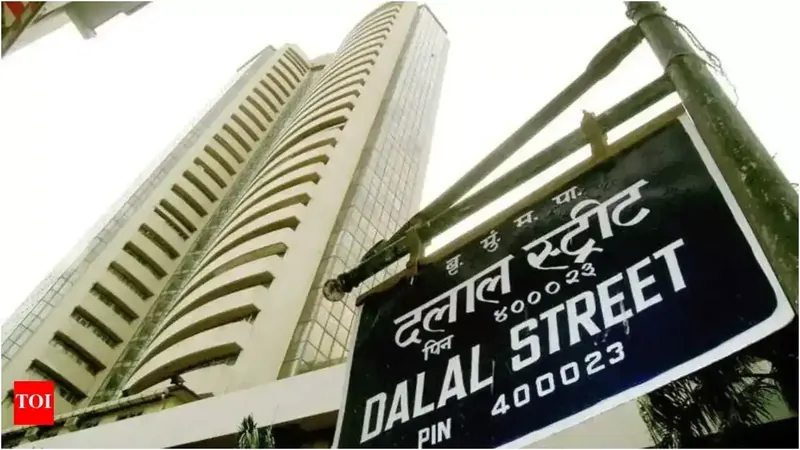
Sensex gained 262 points to close at 77,764 on Friday, while Nifty 50 rose over 95 points to end above 24,270, adding nearly Rs 44,155 crore to the total market capitalisation of BSE-listed companies. The upcoming week, from July 6 to July 10, will be influenced by several factors, including the Q1 earnings season and geopolitical developments.
The Q1 earnings season is set to begin with Tata Consultancy Services (TCS) announcing its April-June quarter results on July 9. This event will mark the start of the earnings season for IT companies and large-cap stocks, potentially shaping market sentiment. Additionally, the ongoing peace efforts between Iran and the US, following talks in Doha, have so far prevented any escalation in the Middle East, which could impact global markets.
Oil prices, which slightly increased to $72 per barrel on Friday, remain near pre-war levels. Kuwait's oil production saw a significant rise to 1.65 million barrels per day in June, boosting exports after the US-Iran interim peace agreement. The continuation of falling oil prices may offer relief to the market.
“Early in the week, scepticism over the durability of the US-Iran peace arrangement, muted expectations ahead of the upcoming earnings season, and a patchy start to the monsoon prompted profit-booking near key psychological levels.”
Vinod Nair, Head of Research at Geojit Investments
The IT sector experienced a notable recovery last week, with the Nifty IT index rebounding by nearly 2% and extending its two-day gain to over 6%. This recovery was driven by value buying and improving global technology sentiment. Meanwhile, the rupee strengthened by 13 paise to close at 95.22 against the US dollar, supported by a weaker dollar and improved global sentiment.
Foreign Institutional Investors (FIIs) remained net sellers, offloading shares worth Rs 312 crore on Thursday. However, this is marginal compared to the significant outflows earlier this year. Market sentiment improved as the week progressed, with easing tensions around the Strait of Hormuz and dovish commentary from the Fed Chair.
“The Nifty IT index rebounded nearly 2%, extending its two-day gain to over 6% on value buying following the recent correction and improving global technology sentiment.”
Siddhartha Khemka, Head of Research, Wealth Management, Motilal Oswal Financial Services
Background
The Indian stock market has been experiencing fluctuations due to global geopolitical tensions and domestic economic factors. The recent gains in Sensex and Nifty reflect a shift from defensive caution to optimism, influenced by easing tensions in the Middle East and positive domestic developments.
Looking ahead, market direction will be influenced by the start of the domestic earnings season, monsoon progress, and ongoing trade negotiations. While risks persist, including downward revisions to earnings growth estimates and monsoon-related inflation concerns, the broader bias remains buy-on-dips, with a focus on large caps due to their earnings resilience.