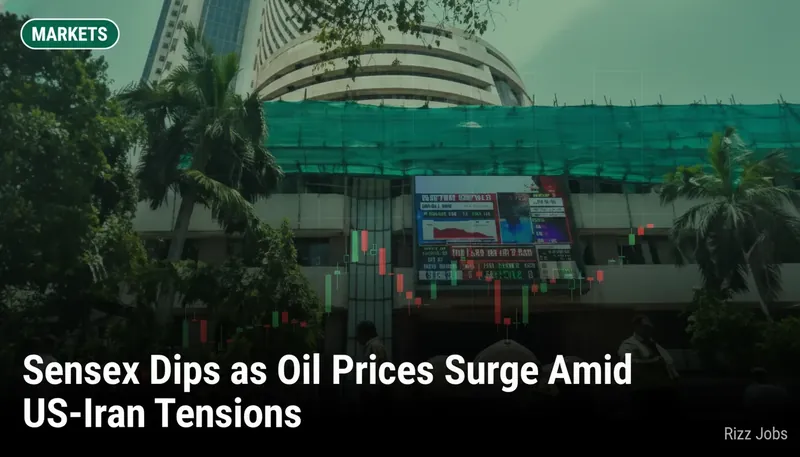
The Indian stock market witnessed a downturn today as escalating tensions between the United States and Iran sent ripples through global financial markets. The BSE Sensex fell by 300 points, while the Nifty dipped below the 22,650 mark, driven by a surge in oil prices that breached the $110 per barrel threshold. This development comes in the wake of heightened threats from US President Donald Trump towards Iran, causing anxiety among investors worldwide.
The rise in oil prices has significant implications for the Indian economy, which is heavily reliant on oil imports. Higher crude prices can lead to increased inflationary pressures, potentially affecting consumer spending and corporate profitability. Key Indian companies such as IndiGo, Kotak Mahindra Bank, and Reliance Industries bore the brunt of this market sentiment, experiencing notable declines in their stock valuations.
For investors, the current scenario underscores the importance of monitoring geopolitical developments and their impact on commodity prices. As oil prices climb, sectors such as aviation and transportation may face increased operational costs, while oil exploration and production companies could see improved margins. However, the broader market sentiment remains cautious, with investors keeping a close eye on further developments in US-Iran relations.
The Indian government and the Reserve Bank of India (RBI) may need to consider policy measures to mitigate the adverse effects of rising oil prices on the economy. This could include adjustments in interest rates or interventions in the foreign exchange market to stabilize the rupee. In the meantime, market participants are advised to adopt a diversified investment strategy to navigate the current volatility.