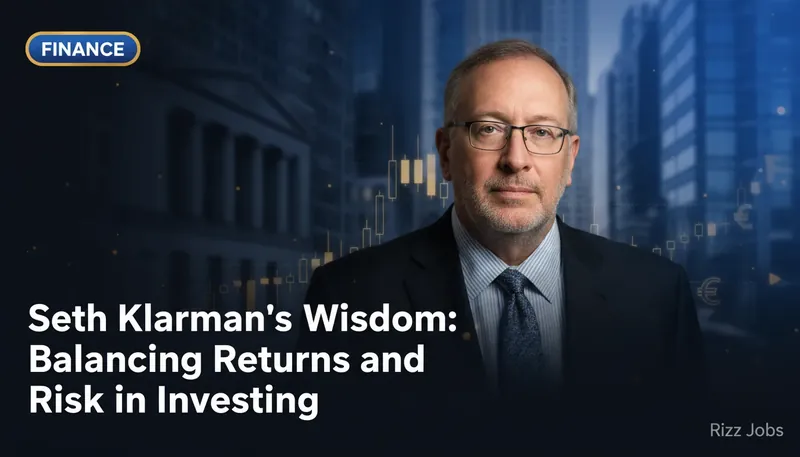
In the world of investing, where the allure of high returns often overshadows the inherent risks, Seth Klarman's philosophy serves as a timely reminder for investors globally, including those in India. Klarman, a renowned investor and author, emphasizes the critical importance of risk management over the mere pursuit of returns. His perspective is particularly relevant in the current economic climate, where market volatility and geopolitical tensions have heightened the stakes for investors.
Klarman's assertion that most investors focus primarily on potential gains while neglecting the risks is a cautionary tale for Indian investors who are increasingly participating in the equity markets. With the rise of retail investors in India, driven by increased access to digital trading platforms and a growing appetite for equities, the temptation to chase high returns is stronger than ever. However, Klarman warns that this return-first mindset can lead to costly mistakes.
For Indian investors, the lesson is clear: true wealth creation is not just about maximizing returns but also about safeguarding capital. This involves maintaining a margin of safety—a buffer that protects against unforeseen market downturns. In a market like India, where economic indicators can be unpredictable, and regulatory changes can impact market dynamics, the ability to manage risk becomes even more crucial.
Klarman's insights also highlight the importance of understanding the difference between temporary market fluctuations and permanent capital loss. While short-term volatility is a natural part of market behavior, the real danger lies in permanent loss, which can occur when investors are not adequately prepared for downturns. This is particularly relevant for Indian investors who may be swayed by the promise of quick gains in a rapidly growing economy.
In conclusion, Klarman's wisdom underscores the need for a balanced approach to investing—one that prioritizes risk management alongside the pursuit of returns. For Indian investors, adopting this mindset could mean the difference between sustainable wealth creation and potential financial setbacks.